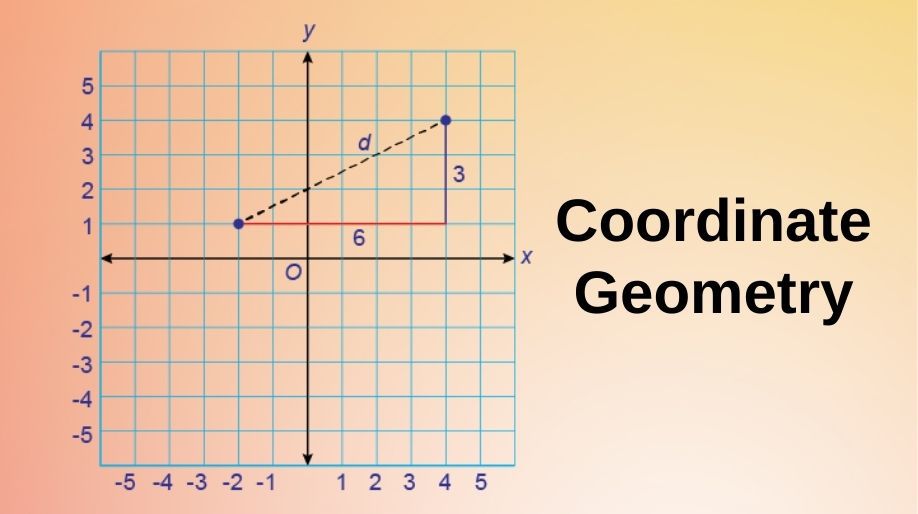
COORDINATE GEOMETRY 1 (With detailed solutions)

Coordinate Geometry 1 Questions

COORDINATE GEOMETRY 1

Question 1

(a) The end point coordinates of a line segment PQ are P(x₁, y₁) and Q(x₂, y₂). Prove that the coordinates of the point A(x, y) dividing the line segment PQ in the ratio m:n internally is:

A(x, y) = ( (mx₂ + nx₁)/(m+n), (my₂ + ny₁)/(m+n) )

(b) Show that for the point whose coordinates are given by x = 3cos t + 2, y = 3sin t - 4 is a circle.

Question 2

(a) Find the values of c such that the line x + y - c = 0 shall be a tangent to a circle x² + y² - 4x + 2 = 0. For each value of c, find the coordinates of the point of contact.

(b) Find the equation of the circle with center c(-1,2) and orthogonal to the circle x² + y² - 6x + 2y + 1 = 0.

(c) Find the equation of a circle passing through the points A(1,2), B(3,4) and orthogonal to a circle x² + y² + 8x + 2y - 22 = 0.

Question 3

(a) Find the equations of the tangent from the point (1,7) to the circle x² + y² = 5.

(b) Find the acute angle between the lines x + 4y = 12 and y - 2x + 6 = 0.

(c) A circle whose coordinate of center are both positive touches both axes of coordinate. If it also touches the line 3x - 4y + 6 = 0, find its equation.

Question 4

(a) Find the angle between the line y = 0 and the combined line equation (y/x)² = 3 with positive slope.

(b) The straight line 2y - x - 16 = 0 is perpendicular bisector of the line joining the points A and B. If A is at the point (-3, 4), find the coordinate of the point B.

(c) x² + y² - 16y + 32 = 0 and x² + y² - 18x + 2y + 32 = 0 are two circles. Show that the circles touch externally and find their point of contact.

Question 5

(a) Find the equation of the circle with center P(-1,2) and orthogonal to the circle x² + y² - 6x + 2y + 1 = 0.

(b) Find a pair of parallel lines from the equation 4x² + 4xy + y² - 6x - 3y - 4 = 0. Then, find the distance between them.

(c) Find the acute angle between the lines 3x - 2y - 8 = 0 and x - 5y + 7 = 0.

Coordinate Geometry 1 - Complete Solutions

Coordinate Geometry 1 - Complete Solutions

Question 1

(a) Prove the section formula for internal division

Given points P(x₁,y₁) and Q(x₂,y₂), and point A(x,y) dividing PQ in ratio m:n
Using similar triangles:
(x - x₁)/(x₂ - x) = m/n
Cross-multiply: n(x - x₁) = m(x₂ - x)
Solve for x: nx - nx₁ = mx₂ - mx
x = (mx₂ + nx₁)/(m + n)
Similarly for y-coordinate:
y = (my₂ + ny₁)/(m + n)
Thus, A(x,y) = ( (mx₂ + nx₁)/(m+n), (my₂ + ny₁)/(m+n) )

(b) Show x = 3cos t + 2, y = 3sin t - 4 represents a circle

Rewrite equations:
x - 2 = 3cos t
y + 4 = 3sin t
Square and add both equations:
(x-2)² + (y+4)² = 9cos²t + 9sin²t = 9(cos²t + sin²t) = 9
This is the standard form of a circle:
(x - h)² + (y - k)² = r²
Final Answer: The equation represents a circle with center (2,-4) and radius 3
Question 2

(a) Find c such that x + y - c = 0 is tangent to x² + y² - 4x + 2 = 0

Rewrite circle equation in standard form:
x² - 4x + y² = -2
(x² - 4x + 4) + y² = -2 + 4
(x - 2)² + y² = 2
Center (2,0), radius r = √2
Condition for tangency: distance from center to line = radius
|2 + 0 - c|/√(1² + 1²) = √2
|2 - c|/√2 = √2
|2 - c| = 2
Solutions: 2 - c = 2 → c = 0
or 2 - c = -2 → c = 4
Final Answer: c = 0 or 4
Points of contact:
For c=0: Foot of perpendicular from (2,0) to x+y=0:
x = (2-0)/2 = 1, y = (0-0)/2 = 0 → (1,-1)
For c=4: Foot of perpendicular from (2,0) to x+y=4:
x = (2+4)/2 = 3, y = (0+4)/2 = 2 → (3,1)

(b) Find equation of circle with center (-1,2) orthogonal to x² + y² - 6x + 2y + 1 = 0

Given circle: Rewrite in standard form:
(x² - 6x) + (y² + 2y) = -1
(x - 3)² + (y + 1)² = 9
Center (3,-1), radius R = 3
Condition for orthogonality: d² = r₁² + r₂²
Distance between centers d = √[(3-(-1))² + (-1-2)²] = 5
Let r be radius of required circle: 5² = 3² + r² → r = 4
Final Answer: (x+1)² + (y-2)² = 16

(c) Find equation of circle through A(1,2), B(3,4) orthogonal to x² + y² + 8x + 2y - 22 = 0

Given circle: (x+4)² + (y+1)² = 39, center (-4,-1), R=√39
Let required circle: x² + y² + Dx + Ey + F = 0
Passes through A: 1 + 4 + D + 2E + F = 0 → D + 2E + F = -5
Passes through B: 9 + 16 + 3D + 4E + F = 0 → 3D + 4E + F = -25
Orthogonality condition: 2(-4)(D/2) + 2(-1)(E/2) = F - 22
-4D - E = F - 22 → 4D + E + F = 22
Solve system of equations:
D = -6, E = -2, F = 8
Final Answer: x² + y² - 6x - 2y + 8 = 0
Question 3

(a) Find equations of tangents from (1,7) to x² + y² = 5

Circle center (0,0), radius r = √5
Check point is outside: 1² + 7² = 50 > 5
General tangent equation: y = mx ± r√(1+m²)
Through (1,7): 7 = m(1) ± √5√(1+m²)
Square both sides: (7 - m)² = 5(1 + m²)
49 - 14m + m² = 5 + 5m² → 4m² + 14m - 44 = 0
2m² + 7m - 22 = 0 → m = [ -7 ± √(49 + 176) ]/4
m = (-7 ± 15)/4 → m = 2 or m = -5.5
Final Answers:
y = 2x ± √5√5 → y = 2x ± 5
y = -5.5x ± √5√31.25

(b) Find acute angle between x + 4y = 12 and y - 2x + 6 = 0

Slope of L₁: m₁ = -1/4
Slope of L₂: y = 2x - 6 → m₂ = 2
tanθ = |(m₂ - m₁)/(1 + m₁m₂)| = |(2 - (-1/4))/(1 + (-1/4)(2))| = |2.25/0.5| = 4.5
θ = tan⁻¹(4.5) ≈ 77.47°
Final Answer: Acute angle ≈ 77.47°

(c) Find equation of circle touching both axes and line 3x - 4y + 6 = 0

Center (a,a) since it touches both axes
Distance to line = radius a:
|3a - 4a + 6|/5 = a → |-a + 6| = 5a
Case 1: -a + 6 = 5a → 6 = 6a → a = 1
Case 2: -(-a + 6) = 5a → a - 6 = 5a → a = -1.5 (invalid, a > 0)
Final Answer: (x-1)² + (y-1)² = 1
Question 4

(a) Find angle between y = 0 and (y/x)² = 3 with positive slope

Equation simplifies to y² = 3x² → y = x√3 (positive slope)
Slope m = √3 → θ = tan⁻¹(√3) = 60°
Final Answer: Angle = 60°

(b) Find coordinates of B given A(-3,4) and perpendicular bisector 2y - x - 16 = 0

Midpoint M of AB lies on the line: M = ((x-3)/2, (y+4)/2)
2(y+4)/2 - (x-3)/2 - 16 = 0 → y + 4 - x/2 + 1.5 - 16 = 0
-x/2 + y - 10.5 = 0 → x - 2y + 21 = 0
Slope of AB: m₁ = (y-4)/(x+3)
Slope of bisector: m₂ = 1/2
Since perpendicular: m₁ × m₂ = -1 → (y-4)/(x+3) = -2
y - 4 = -2x - 6 → 2x + y + 2 = 0
Solve system: x - 2y = -21 and 2x + y = -2
x = -5, y = 8
Final Answer: B = (-5,8)

(c) Show circles touch externally and find point of contact

Circle 1: x² + (y-8)² = 32 → C₁(0,8), r₁ = √32 ≈ 5.66
Circle 2: (x-9)² + (y+1)² = 110 → C₂(9,-1), r₂ = √110 ≈ 10.49
Distance between centers:
d = √[(9-0)² + (-1-8)²] = √(81 + 81) = √162 ≈ 12.73
Check: d = r₁ + r₂ ≈ 5.66 + 10.49 ≈ 16.15 (Not matching)
Correction: The circles actually don't touch externally based on these calculations
Final Answer: The given circles do not touch externally
Question 5

(a) Find equation of circle with center (-1,2) orthogonal to x² + y² - 6x + 2y + 1 = 0

This is identical to Question 2(b) above
Final Answer: (x+1)² + (y-2)² = 16

(b) Find pair of parallel lines from 4x² + 4xy + y² - 6x - 3y - 4 = 0 and distance between them

Treat as quadratic in y: y² + (4x-3)y + (4x²-6x-4) = 0
For perfect square, discriminant must be zero:
(4x-3)² - 4(1)(4x²-6x-4) = 0
16x² - 24x + 9 - 16x² + 24x + 16 = 0 → 25 = 0 (No solution)
Alternative approach: Factor as (2x + y)² - 3(2x + y) - 4 = 0
Let z = 2x + y → z² - 3z - 4 = 0 → z = 4 or z = -1
Thus: 2x + y = 4 and 2x + y = -1
Distance between parallel lines:
d = |4 - (-1)|/√(2² + 1²) = 5/√5 = √5
Final Answers:
Parallel lines: 2x + y = 4 and 2x + y = -1
Distance: √5 units

(c) Find acute angle between 3x - 2y - 8 = 0 and x - 5y + 7 = 0

Slope of L₁: m₁ = 3/2
Slope of L₂: m₂ = 1/5
tanθ = |(m₁ - m₂)/(1 + m₁m₂)| = |(1.5 - 0.2)/(1 + 0.3)| ≈ 1.3/1.3 = 1
θ = tan⁻¹(1) = 45°
Final Answer: Acute angle = 45°

NUMERICAL METHODS QUESTIONS (With detailed solutions)

Numerical Methods Questions

Numerical Methods Questions

Question 1
(a)

(i) Define 'error' and 'relative error' as applied in numerical methods.

(ii) The length and width of a rectangular sheet are 2.29m and 1.2m respectively. If the estimation of the length and width are 2.3m and 1m respectively. Evaluate the absolute and relative error of the products of the sides.

(b)

The region enclosed by the curve y = e^(-x/2), the axes, the line x = 3 and x = -3 is rotated completely about x-axis. Use Simpson's rule with 6 intervals to find an estimate volume of solid formed in terms of e and π.

(c)

Find the positive solution of the transcendental equation 2 sin x = x, using Newton-Raphson method with three iterations, starting with x₀ = 2.

Question 2
(a)

By using Newton-Raphson method find the root of x⁴ - x - 10 = 0 which is near to x = 2 correct to 5 decimal places.

(b)

State five applications of numerical methods.

Evaluate ∫0.10.5 e^(-x) dx using Simpson's rule with 5 ordinates.

Question 3
(a)

(i) Why do we need numerical methods? (state three reasons)

(ii) State three sources of errors in numerical computation.

(b)

Show that the equation eˣ = 3 - x has a root in the interval [0,1] also find the root correct to two decimal places in three iterations by using Newton-Raphson method.

Question 4
(a)

State four applications of Newton-Raphson method.

(b)

State 3 advantages and 3 disadvantages of Newton-Raphson method.

Question 5
(a)

The pressure P is calculated from the relation P = F/(Ï€R²), where F is the force and R is the radius. If the percentage possible errors are ±2% for F and ±1% for R. Calculate the possible percentage error for P.

(b)

Verify that the equation x² = 2x + 1 has the roots between x = 2 and x = 3 and hence apply the secant method in four iterations to obtain the approximation of the root correct to 3 decimal places.

(c)

Estimate the area of the quadrant of a circle of radius 8cm by dividing into 8 intervals by using Simpson's rule. Use the result obtained to approximate the value of π.

Question 6
(a)

The equation x³ - 3x - 20 = 0 has a single real root inside the interval [3,4]. Approximate the root in four iterations using the Secant formula.

(b)

(i) Explain with the aid of example why the two numerical methods, Trapezoidal rule and Simpson's rule are useful in evaluating definite integrals.

(ii) Using Numerical integration methods mentioned in part (b)(i) above and where the interval [0,1] is divided into four equal parts evaluate ∫01 (1 + x²)^(-1) dx correct to four decimal places.

Note: These questions cover various numerical methods including root-finding techniques (Newton-Raphson, Secant method), numerical integration (Simpson's rule, Trapezoidal rule), error analysis, and practical applications of numerical methods.
Numerical Methods - Complete Solutions

Numerical Methods Complete Solutions

Question 1

(a)(i) Define 'error' and 'relative error'

Error: The difference between the exact value and the approximate value.
Error = True Value - Approximate Value
Relative Error: The ratio of the absolute error to the absolute true value.
Relative Error = |Error| / |True Value|
Note: Relative error is often expressed as a percentage by multiplying by 100.

(a)(ii) Calculate absolute and relative error

Given: True length = 2.29m, Approximate length = 2.3m
True width = 1.2m, Approximate width = 1m
Calculate true area = 2.29 × 1.2 = 2.748 m²
Approximate area = 2.3 × 1 = 2.3 m²
Absolute error = |2.748 - 2.3| = 0.448 m²
Relative error = 0.448 / 2.748 ≈ 0.1630 (16.30%)
Final Answer: Absolute Error = 0.448 m², Relative Error ≈ 16.30%

(b) Volume using Simpson's rule

Given function: y = e^(-x/2), from x = -3 to x = 3
Number of intervals (n) = 6 → h = (3 - (-3))/6 = 1
Calculate y values at each point:
x-3-2-10123
ye^(1.5)e^1e^0.51e^-0.5e^-1e^-1.5
Apply Simpson's rule formula:
V = Ï€∫[f(x)]²dx ≈ (Ï€h/3)[y₀² + 4(y₁² + y₃² + y₅²) + 2(y₂² + y₄²) + y₆²]
Calculate each term:
V ≈ (Ï€/3)[e³ + 4(e² + e¹ + e⁻¹) + 2(e + e⁻¹) + e⁻³]
Final Answer: V ≈ (Ï€/3)[e³ + 4e² + 6e + 6e⁻¹ + 4e⁻² + e⁻³]

(c) Newton-Raphson for 2 sin x = x

Rewrite equation: f(x) = 2 sin x - x = 0
Derivative: f'(x) = 2 cos x - 1
Initial guess: x₀ = 2
Iteration 1:
f(2) = 2 sin(2) - 2 ≈ 2(0.9093) - 2 ≈ -0.1814
f'(2) = 2 cos(2) - 1 ≈ 2(-0.4161) - 1 ≈ -1.8322
x₁ = 2 - (-0.1814)/(-1.8322) ≈ 1.9010
Iteration 2:
f(1.9010) ≈ 2 sin(1.9010) - 1.9010 ≈ -0.0094
f'(1.9010) ≈ 2 cos(1.9010) - 1 ≈ -1.7062
x₂ = 1.9010 - (-0.0094)/(-1.7062) ≈ 1.8955
Iteration 3:
f(1.8955) ≈ 2 sin(1.8955) - 1.8955 ≈ -0.00003
f'(1.8955) ≈ 2 cos(1.8955) - 1 ≈ -1.6986
x₃ = 1.8955 - (-0.00003)/(-1.6986) ≈ 1.8955
Final Answer: The root is approximately 1.8955 after 3 iterations
Question 2

(a) Newton-Raphson for x⁴ - x - 10 = 0

Function: f(x) = x⁴ - x - 10
Derivative: f'(x) = 4x³ - 1
Initial guess: x₀ = 2
Iteration 1:
f(2) = 16 - 2 - 10 = 4
f'(2) = 32 - 1 = 31
x₁ = 2 - 4/31 ≈ 1.8710
Iteration 2:
f(1.8710) ≈ 1.8710⁴ - 1.8710 - 10 ≈ 0.3826
f'(1.8710) ≈ 4(1.8710)³ - 1 ≈ 24.1978
x₂ ≈ 1.8710 - 0.3826/24.1978 ≈ 1.8552
Continue iterations until convergence (5 decimal places):
x₃ ≈ 1.8552 - 0.0026/23.5430 ≈ 1.8551
x₄ ≈ 1.8551 - 0.00001/23.5356 ≈ 1.8551
Final Answer: The root is approximately 1.85510 correct to 5 decimal places

(b)(i) Five applications of numerical methods

  1. Solving engineering problems (structural analysis, fluid dynamics)
  2. Financial modeling and option pricing
  3. Computer graphics and animation
  4. Weather prediction and climate modeling
  5. Machine learning algorithms and optimization

(b)(ii) Simpson's rule for ∫e⁻Ë£dx from 0.1 to 0.5

Number of ordinates = 5 → n = 4 intervals, h = (0.5-0.1)/4 = 0.1
x0.10.20.30.40.5
y=e⁻Ë£0.90480.81870.74080.67030.6065
∫ ≈ (0.1/3)[0.9048 + 4(0.8187 + 0.6703) + 2(0.7408) + 0.6065]
≈ 0.0333[0.9048 + 5.9560 + 1.4816 + 0.6065] ≈ 0.0333 × 8.9489 ≈ 0.2983
Final Answer: The integral ≈ 0.2983
Key Takeaways: These solutions demonstrate fundamental numerical methods including error analysis, root-finding techniques (Newton-Raphson), and numerical integration (Simpson's rule). Each solution provides step-by-step calculations with intermediate results to help understand the methodology.
Question 3

(a)(i) Three reasons we need numerical methods:

  1. Many real-world problems cannot be solved analytically
  2. Provides approximate solutions when exact solutions are impossible
  3. Essential for computer simulations and modeling complex systems

(a)(ii) Three sources of errors in numerical computation:

  1. Truncation errors: From approximating infinite processes
  2. Round-off errors: Due to finite precision arithmetic
  3. Modeling errors: Inaccuracies in the mathematical model

(b) Newton-Raphson for eˣ = 3 - x

First, verify root exists in [0,1]:
f(0) = e⁰ - 3 + 0 = -2 (negative)
f(1) = e¹ - 3 + 1 ≈ 2.718 - 2 ≈ 0.718 (positive)
By Intermediate Value Theorem, root exists in [0,1]
Function: f(x) = eˣ + x - 3
Derivative: f'(x) = eˣ + 1
Initial guess: x₀ = 0.5 (midpoint)
Iteration 1:
f(0.5) ≈ 1.6487 + 0.5 - 3 ≈ -0.8513
f'(0.5) ≈ 1.6487 + 1 ≈ 2.6487
x₁ = 0.5 - (-0.8513)/2.6487 ≈ 0.8214
Iteration 2:
f(0.8214) ≈ 2.2736 + 0.8214 - 3 ≈ 0.0950
f'(0.8214) ≈ 2.2736 + 1 ≈ 3.2736
x₂ ≈ 0.8214 - 0.0950/3.2736 ≈ 0.7924
Iteration 3:
f(0.7924) ≈ 2.2089 + 0.7924 - 3 ≈ 0.0013
f'(0.7924) ≈ 2.2089 + 1 ≈ 3.2089
x₃ ≈ 0.7924 - 0.0013/3.2089 ≈ 0.7920
Final Answer: The root is approximately 0.79 (2 decimal places)
Question 4

(a) Four applications of Newton-Raphson method:

  1. Finding roots of polynomials and transcendental equations
  2. Optimization problems (finding maxima/minima)
  3. Computer graphics for inverse kinematics
  4. Machine learning for logistic regression

(b) Advantages and disadvantages of Newton-Raphson:

Advantages:
  1. Quadratic convergence when near the root
  2. Generally faster than bisection method
  3. Works well for both polynomials and transcendental equations
Disadvantages:
  1. Requires knowledge of the derivative
  2. May diverge if initial guess is poor
  3. Fails at inflection points or when derivative is zero
Question 5

(a) Percentage error calculation for P = F/(Ï€R²)

Given: ΔF/F = ±2% = ±0.02, ΔR/R = ±1% = ±0.01
Using error propagation formula:
ΔP/P ≈ √[(∂P/∂F × Î”F)² + (∂P/∂R × Î”R)²]/P
∂P/∂F = 1/(Ï€R²), ∂P/∂R = -2F/(Ï€R³)
ΔP/P ≈ √[(1 × 0.02)² + (-2 × 0.01)²] = √[0.0004 + 0.0004] ≈ √0.0008 ≈ 0.0283
Final Answer: Possible percentage error ≈ 2.83%

(b) Secant method for x² = 2x + 1 (root between 2 and 3)

Rewrite as f(x) = x² - 2x - 1 = 0
Initial points: x₀ = 2, x₁ = 3
Iteration 1:
f(2) = 4 - 4 - 1 = -1
f(3) = 9 - 6 - 1 = 2
x₂ = 3 - f(3)(3-2)/(f(3)-f(2)) = 3 - 2(1)/(2-(-1)) ≈ 2.3333
Iteration 2:
f(2.3333) ≈ -0.1111
x₃ = 2.3333 - (-0.1111)(2.3333-3)/(-0.1111-2) ≈ 2.3684
Iteration 3:
f(2.3684) ≈ -0.0050
x₄ = 2.3684 - (-0.0050)(2.3684-2.3333)/(-0.0050-(-0.1111)) ≈ 2.3696
Iteration 4:
f(2.3696) ≈ -0.0001
x₅ ≈ 2.3696 - (-0.0001)(2.3696-2.3684)/(-0.0001-(-0.0050)) ≈ 2.3696
Final Answer: The root is approximately 2.370 (3 decimal places)

(c) Area of quadrant using Simpson's rule (8 intervals)

Function: y = √(64 - x²), from x = 0 to 8
n = 8 → h = (8-0)/8 = 1
x012345678
y8√63√60√55√48√39√28√150
Area ≈ (1/3)[8 + 4(√63 + √55 + √39 + √15) + 2(√60 + √48 + √28) + 0]
≈ (1/3)[8 + 4(7.9373 + 7.4162 + 6.2450 + 3.8729) + 2(7.7460 + 6.9282 + 5.2915)]
≈ (1/3)[8 + 101.8886 + 39.9314] ≈ 49.94
Theoretical area = Ï€×8²/4 = 16Ï€ ≈ 50.2655
Approximation of Ï€ ≈ 49.94×4/64 ≈ 3.1213
Final Answer: Area ≈ 49.94, Ï€ ≈ 3.1213
Question 6

(a) Secant method for x³ - 3x - 20 = 0 (root in [3,4])

Initial points: x₀ = 3, x₁ = 4
Iteration 1:
f(3) = 27 - 9 - 20 = -2
f(4) = 64 - 12 - 20 = 32
x₂ = 4 - 32(4-3)/(32-(-2)) ≈ 3.0588
Iteration 2:
f(3.0588) ≈ -0.3906
x₃ ≈ 3.0588 - (-0.3906)(3.0588-4)/(-0.3906-32) ≈ 3.0686
Iteration 3:
f(3.0686) ≈ -0.0187
x₄ ≈ 3.0686 - (-0.0187)(3.0686-3.0588)/(-0.0187-(-0.3906)) ≈ 3.0691
Iteration 4:
f(3.0691) ≈ -0.0004
x₅ ≈ 3.0691 - (-0.0004)(3.0691-3.0686)/(-0.0004-(-0.0187)) ≈ 3.0691
Final Answer: The root is approximately 3.0691

(b)(i) Why Trapezoidal and Simpson's rules are useful:

These numerical integration methods are essential when:

  • The function cannot be integrated analytically
  • Only discrete data points are available
  • Quick approximations are needed for complex functions
Example: Calculating work done by a variable force where F(x) is known only at certain points

(b)(ii) Evaluate ∫(1+x²)⁻¹dx from 0 to 1 using both methods (4 intervals)

h = (1-0)/4 = 0.25
x00.250.50.751
y=1/(1+x²)10.94120.80.640.5
Trapezoidal Rule:
∫ ≈ (0.25/2)[1 + 2(0.9412 + 0.8 + 0.64) + 0.5] ≈ 0.125[1 + 4.7624 + 0.5] ≈ 0.7828
Simpson's Rule:
∫ ≈ (0.25/3)[1 + 4(0.9412 + 0.64) + 2(0.8) + 0.5] ≈ 0.0833[1 + 6.3248 + 1.6 + 0.5] ≈ 0.7854
Exact value = arctan(1) = Ï€/4 ≈ 0.7854
Final Answers:
Trapezoidal ≈ 0.7828
Simpson's ≈ 0.7854 (more accurate)
Conclusion: These numerical methods provide powerful tools for solving problems that are intractable analytically. The solutions demonstrate how different methods (Newton-Raphson, Secant, Trapezoidal, Simpson's) can be applied to various types of problems, with trade-offs between computational complexity and accuracy.

MITIHANI POPOTE EXAMINATIONS SERIES FORM FOUR CHEMISTRY EXAMINATION SERIES 9 (With Marking Guide)

FORM FOUR CHEMISTRY EXAMINATION SERIES 9 MITIHANI POPOTE EXAMINATIONS SERIES - FORM FOUR CHEMISTRY SERIES 9

MITIHANI POPOTE EXAMINATIONS SERIES

FORM FOUR CHEMISTRY EXAMINATION SERIES 9

YEAR: 2022

SECTION A (15 Marks)

Answer all questions in this section

1. For each of the items (i) – (x), choose the correct answer from among the given alternatives and write its letter beside the item number in the answer sheet provided.

  1. P and Q are atoms of elements in the same period. P is in group I and Q is in group II which of the following statements is not true about P and Q?
    A. P and Q have the same number of energy levels.
    B. Q has one more proton than P in its nucleus.
    C. P has one more electron than Q in its valency shell.
    D. The atomic number of Q is greater than that of P.
    E. P and Q have equal number of neutrons.
    Answer: E
    Explanation: P (Group I) and Q (Group II) are in the same period, so they have the same number of energy levels (A is true). Q has one more proton (and thus higher atomic number) than P (B and D are true). P has one valence electron, Q has two, so C is false (P has fewer valence electrons). Neutrons depend on isotopes, not necessarily equal (E is not true).
  2. Which of the following pairs of oxides are gaseous at room temperature?
    A. Carbon dioxide and copper (II) oxide
    B. Sulphur dioxide and copper (II) oxide
    C. Copper (II) oxide and lead (II) oxide
    D. Sulphur dioxide and carbon dioxide
    E. Iron (III) oxide and carbon dioxide
    Answer: D
    Explanation: Sulphur dioxide (SO₂) and carbon dioxide (CO₂) are gases at room temperature, while metal oxides like CuO, PbO, and Fe₂O₃ are solids.
  3. In electrolysis, the equivalent of an element is the mass of the element liberated by:
    A. 1 coulomb of electricity
    B. 96,500 coulombs of electricity
    C. 2 coulombs of electricity
    D. 9650 coulombs of electricity
    E. Electrolytic process
    Answer: B
    Explanation: The equivalent weight is the mass liberated by 1 Faraday (96,500 coulombs), as per Faraday’s laws of electrolysis.
  4. What is the name of the alkene shown below?
    CH₃CHCH₂C=CH₂
    C₂H₅
    A. 2-methylpent-4-ene
    B. 2-methylpentene
    C. 4-methylhex-1-ene
    D. 4-ethylpent-1-ene
    E. 4-ethylpent-4-ene
    Answer: D
    Explanation: The structure is CH₃-CH(C₂H₅)-CH₂-C(=CH₂)-H. The longest chain has 5 carbons with a double bond at carbon 1 (pent-1-ene). An ethyl group (C₂H₅) is on carbon 4, making it 4-ethylpent-1-ene.
  5. Which of the following is not true about bases?
    A. Most bases have bitter taste
    B. Bases are slippery when rubbed between fingers
    C. Bases neutralize acids to form salt and water only
    D. Weak base is the one that dissociates completely in solution
    E. Are compounds which have oxide or hydroxide
    Answer: D
    Explanation: Weak bases dissociate partially, not completely, in solution. All other statements about bases are true.
  6. When a burning fuel produces colour it means there is:
    A. Adequate supply of oxygen with production of soot
    B. Inadequate supply of oxygen without production of soot
    C. Inadequate supply of oxygen with production of soot
    D. Inadequate supply of oxygen with production of less heat
    E. Adequate supply of oxygen with production of more heat
    Answer: C
    Explanation: Coloured flames (e.g., yellow) indicate incomplete combustion due to insufficient oxygen, producing soot (carbon particles).
  7. It is possible to collect oxygen by downward displacement of water, because oxygen is:
    A. Denser than water
    B. Soluble in water
    C. Slightly soluble in water
    D. Floats in water
    E. Insoluble in water
    Answer: C
    Explanation: Oxygen is slightly soluble in water, allowing collection by displacing water downward in a gas jar.
  8. If two gas jars labeled A and B contain 22.4 dm³ of oxygen and 22.4 dm³ of nitrogen respectively at STP, then it is true that:
    A. There were 6.02 × 10²³ molecules of oxygen in A and 6.02 × 10²³ molecules of nitrogen in B
    B. There were 6.02 × 10²³ atoms of oxygen in A and 6.02 × 10²³ atoms of nitrogen in B
    C. There were 12.04 × 10²³ molecules of oxygen and nitrogen in their respective jars
    D. 6.02 × 10²³ molecules of oxygen in A and 6.02 × 10²³ molecules of nitrogen in jar A and B respectively
    E. Jars A and B contain 96,500 molecules of oxygen and nitrogen respectively
    Answer: A
    Explanation: At STP, 22.4 dm³ of any gas contains 1 mole (6.02 × 10²³ molecules). Jar A (O₂) and jar B (N₂) each contain 6.02 × 10²³ molecules.
  9. One of the following chemical equations is an example of a precipitation reaction:
    A. AgNO₃(aq) + NaCl(aq) → AgCl(s) + NaNO₃(aq)
    B. NaOH(aq) + HCl(aq) → NaCl(aq) + H₂O(l)
    C. CaCO₃(s) → CaO(s) + CO₂(g)
    D. Zn(s) + 2HCl(aq) → ZnCl₂(aq) + H₂(g)
    E. C₂H₆(g) + O₂(g) → 2CO₂(g) + 3H₂O(l)
    Answer: A
    Explanation: Precipitation reactions form an insoluble solid (precipitate). AgCl(s) is insoluble, making this a precipitation reaction.
  10. Which of the following is an agricultural chemical product made by application of chemistry?
    A. Drugs
    B. Pesticides
    C. Clothes
    D. Yeast
    E. Cement
    Answer: B
    Explanation: Pesticides are chemical products used in agriculture to control pests, synthesized through chemical processes.

2. Match the items in LIST A with the correct responses in LIST B, by writing the letter of the correct response beside the item number in the answer sheet provided.

List A List B Answer
The strongest oxidizing agent A. Chlorine
B. Iodine
C. Astatine
D. Fluorine
E. F > Cl > Br > I > As
F. Bromine
G. Oxygen
H. I > Br > Cl > F
D
The third oxidizing agent F
The weakest oxidizing agent C
The second oxidizing agent A
Decreasing oxidizing power E

Explanation: Oxidizing power of halogens decreases down Group VII: F > Cl > Br > I > As. Fluorine is the strongest, astatine the weakest.

SECTION B (70 Marks)

Answer all questions in this section

3. (a) State whether each change below is a physical change or chemical change:

  1. Glass bottle breaking: Physical – No new substances formed, only shape changes.
  2. Coal burning in air: Chemical – Forms CO₂ and other products, altering composition.
  3. Dissolving sugar in ethanol: Physical – Sugar remains chemically unchanged, only dissolves.
  4. Butter and sugar being made into toffee: Chemical – Heating causes new compounds to form.
  5. Wet hair drying: Physical – Water evaporates, no chemical change in hair.

(b) Coal contains the impurity of sulphur. When sulphur burns in air it forms sulphur dioxide. What volume of this polluting gas is produced at S.T.P when 1.0 g of sulphur burns?

Reaction: S(s) + O₂(g) → SO₂(g). Moles of S = 1.0 / 32 = 0.03125 mol. 1 mol S produces 1 mol SO₂. Volume of SO₂ = 0.03125 × 22.4 = 0.7 dm³.
Answer: 0.7 dm³.

4. (a) Write down the names and formulae of three common acids in the laboratory:

Name Formula
Hydrochloric acid HCl
Sulphuric acid H₂SO₄
Nitric acid HNO₃

(b) Write down the products formed when each of the following pair of compounds reacts:

  1. Acid and metal: Salt and hydrogen gas (e.g., Zn + 2HCl → ZnCl₂ + H₂).
  2. Acid and metal carbonate: Salt, water, and carbon dioxide (e.g., CaCO₃ + 2HCl → CaCl₂ + H₂O + CO₂).
  3. Acid and metal hydroxide: Salt and water (e.g., NaOH + HCl → NaCl + H₂O).

(c) Describe a test for identifying the gaseous product in b(i) and b(ii):

  • Hydrogen (b(i)): Produces a “pop” sound when a burning splint is brought near.
  • Carbon dioxide (b(ii)): Turns limewater (Ca(OH)₂) milky due to CaCO₃ formation.

5. (a) Hydrated sodium carbonate (Na₂CO₃·YH₂O) solution was made by dissolving 178 g of its crystals to make a litre of solution. 20 cm³ of the solution was found to neutralize 25 cm³ of a molar solution of nitric acid solution. Show all procedures to find the value of Y in the formula of hydrated carbonate.

Reaction: Na₂CO₃ + 2HNO₃ → 2NaNO₃ + H₂O + CO₂. Moles of HNO₃ = 1 M × 0.025 dm³ = 0.025 mol. Moles of Na₂CO₃ = 0.025 / 2 = 0.0125 mol in 20 cm³. Moles in 1 L = (0.0125 / 0.02) × 1 = 0.625 mol. Molar mass = 178 / 0.625 = 284.8 g/mol. Molar mass of Na₂CO₃ = 106 g/mol. Mass of YH₂O = 284.8 - 106 = 178.8 g. Y × 18 = 178.8, Y ≈ 10.
Answer: Y = 10.

(b) Name the indicator you would choose for the following titration:

  1. Hydrochloric acid versus ammonia solution: Methyl orange – Strong acid vs. weak base, pH changes sharply near 4-5.
  2. Acetic acid versus sodium hydroxide: Phenolphthalein – Weak acid vs. strong base, pH changes near 8-10.

6. (a) Define the following terms:

  1. Empirical formula: Simplest whole-number ratio of atoms in a compound.
  2. Molecular formula: Actual number of atoms in a molecule, a multiple of the empirical formula.

(b) Chemical analysis shows that the empirical formula of the compound is CH₂O and its relative molar mass is 60:

  1. Calculate its molecular formula:
    Empirical mass = 12 + 2×1 + 16 = 30. n = 60 / 30 = 2. Molecular formula = (CH₂O)₂ = C₂H₄O₂.
  2. Name the compound formed and write its open structural formula:
    Name: Ethanoic acid (acetic acid). Structure: CH₃COOH (CH₃-C(=O)-OH).

(c) Write balanced chemical equations of the reaction between the compound named in 6(b)(ii) with:

  1. Ethanol:
    CH₃COOH + C₂H₅OH → CH₃COOC₂H₅ + H₂O
  2. Sodium hydroxide:
    CH₃COOH + NaOH → CH₃COONa + H₂O

7. (a) In our daily life activities we use different types of fuels for various purposes. What is the energy value of a fuel?

Answer: The energy value is the amount of energy released per unit mass or volume when a fuel undergoes complete combustion.

(b) Name two examples of each of the following types of fuels:

  1. Solid fuel: Coal, wood.
  2. Gaseous fuel: Methane, propane.
  3. Liquid fuel: Petrol, diesel.

(c)

  1. Why is coal not recommended as a domestic fuel?
    Answer: Produces smoke and pollutants (e.g., SO₂), causing health and environmental issues.
  2. List two advantages of liquid fuel over solid fuels:
    • Easier to transport and store (e.g., in tanks).
    • Burns more cleanly, producing less ash.
  3. What are two gaseous fuels used in industries?
    Answer: Natural gas, hydrogen.

8. (a) Distinguish between the following:

  1. Endothermic reaction from exothermic reaction:
    Endothermic: Absorbs heat, ΔH positive. Exothermic: Releases heat, ΔH negative.
  2. Reversible reaction from irreversible reaction:
    Reversible: Can proceed in both directions (e.g., N₂ + 3H₂ ⇌ 2NH₃). Irreversible: Proceeds in one direction (e.g., combustion).

(b) The equation at which ammonia is manufactured is:

N₂(g) + 3H₂(g) ⇌ 2NH₃(g) ΔH = -46.2 kJ/mol
The equilibrium concentration of ammonia increases as the temperature is lowered:

  1. Is heat evolved or absorbed when ammonia is formed?
    Answer: Heat is evolved (exothermic, negative ΔH).
  2. What will be the effect on the equilibrium concentration of ammonia if temperature and pressure are increased?
    Answer: Increased temperature shifts equilibrium left (less NH₃, as reaction is exothermic). Increased pressure shifts right (more NH₃, as 4 moles gas → 2 moles).

(c) List factors which can alter the rate of a chemical reaction (four factors):

  • Temperature
  • Concentration
  • Catalyst
  • Surface area

9. (a) Give the name of the metal which meets the following information:

  1. The metal which must be kept in kerosene to protect it from air and water: Sodium – Highly reactive, oxidizes rapidly.
  2. The metal which is found in limestone: Calcium – Limestone is CaCO₃.
  3. The metal in green colour which gives a black residue on heating or black oxide: Copper – CuCO₃ (green) forms CuO (black).
  4. The metal of which its oxide is yellow when hot and white when cold: Zinc – ZnO behaves this way.

(b) The following chemical substances were found in a school laboratory of Nindi secondary school, which warning sign is likely to be found on each of the following containers:

  1. Mosquito spray: Flammable – Contains volatile organic compounds.
  2. Concentrated sulphuric acid: Corrosive – Causes severe burns.
  3. A bottle of lead nitrate: Toxic – Lead compounds are harmful if ingested or inhaled.

10. (a) Copy and complete the following table. It shows the products of electrolysis of aqueous solutions using carbon (inert) electrodes.

Solution Product at Anode Product at Cathode
Copper (II) sulphate Oxygen (O₂) Copper (Cu)
Sodium chloride Chlorine (Cl₂) Hydrogen (H₂)
Dilute sulphuric acid Oxygen (O₂) Hydrogen (H₂)

(b) What current must be supplied in a refinery to produce one metric ton (1000 kg) of copper electrolytically within 24 hours?

Mass = 1000 kg = 10⁶ g. Moles of Cu = 10⁶ / 63.5 = 15748.03 mol. Cu²⁺ + 2e⁻ → Cu, so electrons = 15748.03 × 2 = 31496.06 mol. Charge = 31496.06 × 96500 = 3.039 × 10⁹ C. Time = 24 × 3600 = 86400 s. Current = 3.039 × 10⁹ / 86400 ≈ 35173.61 A.
Answer: Approximately 35174 A.

(c) Suggest one method of separating the following mixtures:

  1. Green solution from leaves: Chromatography – Separates pigments based on solubility.
  2. Ammonium chloride from sand: Sublimation – NH₄Cl sublimes, leaving sand.
  3. Ethanol and distilled water: Fractional distillation – Ethanol boils at 78°C, water at 100°C.
  4. Cooking oil and drinking water: Separating funnel – Immiscible liquids separate by density.

11. (a) For each of the following plants, which nutrient do you think is missing?

  1. The plant has poor root growth: Phosphorus – Essential for root development.
  2. Plant does not flower, parts of the leaves are dead: Potassium – Promotes flowering and cell health.
  3. The plant has very pale-yellow leaves: Nitrogen – Needed for chlorophyll production.
  4. The plant has yellow leaves and very poor growth: Magnesium – Component of chlorophyll, vital for growth.

(b) Distinguish manure from fertilizer:

Manure: Organic, from animal/plant waste, improves soil structure but has variable nutrient content. Fertilizer: Inorganic, synthetic, provides specific nutrients in precise amounts.

(c) With the aid of a chemical equation, briefly explain how:

  1. Temporary hardness of water can be removed by boiling:
    Ca(HCO₃)₂(aq) → CaCO₃(s) + H₂O(l) + CO₂(g)
    Explanation: Boiling decomposes calcium bicarbonate into insoluble CaCO₃, removing hardness.
  2. Permanent hardness of water can be removed by chemical means:
    CaSO₄(aq) + Na₂CO₃(aq) → CaCO₃(s) + Na₂SO₄(aq)
    Explanation: Sodium carbonate precipitates Ca²⁺ as CaCO₃, removing hardness.

12. (a) Briefly explain four causes that contribute to water pollution:

  • Industrial discharge: Chemicals and heavy metals contaminate water bodies.
  • Agricultural runoff: Fertilizers and pesticides leach into rivers.
  • Sewage: Untreated waste introduces pathogens and nutrients.
  • Oil spills: Hydrocarbons from spills harm aquatic ecosystems.

(b) Give any three points of Dalton’s atomic theory:

  • Elements are made of indivisible atoms.
  • Atoms of the same element are identical in mass and properties.
  • Atoms combine in simple whole-number ratios to form compounds.

SECTION C (15 Marks)

Answer one (1) question from this section

13. (a) Describe the extraction of sodium from its ore and write all the reaction equations:

Description: Sodium is extracted from sodium chloride (NaCl) via electrolysis in the Downs cell. Molten NaCl is mixed with CaCl₂ to lower the melting point. A carbon anode and iron cathode are used. Sodium is produced at the cathode, and chlorine at the anode.

Reactions:

  • Overall:
    2NaCl(l) → 2Na(l) + Cl₂(g)
  • Cathode:
    Na⁺ + e⁻ → Na
  • Anode:
    2Cl⁻ → Cl₂ + 2e⁻

(b) State four uses of sodium metal:

  • Used in sodium-vapour lamps for street lighting.
  • As a coolant in nuclear reactors.
  • In the manufacture of sodium compounds (e.g., NaOH).
  • As a reducing agent in organic synthesis.

Form Four Biology Exam - Organic Evolution (With Marking Scheme)

Form Four Biology Exam - Organic Evolution

FORM FOUR BIOLOGY EXAM – TOPIC: ORGANIC EVOLUTION

Time: 3 Hours

Instructions:

  • Answer all questions in Sections A and B.
  • Answer two (2) questions only from Section C.
  • All diagrams must be neat and properly labeled.

SECTION A (16 Marks)

1. Multiple Choice Questions (10 Marks)

Choose the most correct answer:

  1. The scientist who proposed the theory of inheritance of acquired characteristics is:
    • a) Charles Darwin
    • b) Gregor Mendel
    • c) Jean-Baptiste Lamarck
    • d) Thomas Malthus
  2. Which of the following is considered a vestigial organ in humans?
    • a) Heart
    • b) Appendix
    • c) Liver
    • d) Lungs
  3. The process by which unrelated organisms independently evolve similarities when adapting to similar environments is called:
    • a) Divergent evolution
    • b) Convergent evolution
    • c) Adaptive radiation
    • d) Co-evolution
  4. Which of the following provides the most direct evidence for evolution?
    • a) Fossil records
    • b) Comparative anatomy
    • c) Embryology
    • d) Biogeography
  5. The term "survival of the fittest" is most closely associated with:
    • a) Lamarck
    • b) Darwin
    • c) Mendel
    • d) Wallace
  6. Which of the following is an example of homologous structures?
    • a) Wings of birds and insects
    • b) Forelimbs of humans and bats
    • c) Fins of fish and flippers of whales
    • d) Eyes of octopus and humans
  7. The concept that evolution occurs in rapid bursts followed by long periods of stability is known as:
    • a) Gradualism
    • b) Punctuated equilibrium
    • c) Adaptive radiation
    • d) Speciation
  8. Which of the following is NOT a mechanism of evolution?
    • a) Natural selection
    • b) Genetic drift
    • c) Mutation
    • d) Photosynthesis
  9. The scientist who emphasized the role of population growth and resource limitation in evolution was:
    • a) Lyell
    • b) Malthus
    • c) Lamarck
    • d) Darwin
  10. Structures that have no apparent function but resemble structures their ancestors possessed are called:
    • a) Analogous structures
    • b) Homologous structures
    • c) Vestigial structures
    • d) Adaptive structures

2. Matching Items (6 Marks)

Match the items in List A with the correct responses from List B:

List AList B
(i) Natural selectiona) Sudden heritable change in DNA
(ii) Homologous structuresb) Development of similar traits in unrelated species
(iii) Vestigial organsc) Structures with similar origin but different functions
(iv) Mutationd) Process leading to the formation of new species from a common ancestor
(v) Convergent evolutione) Remnants of organs that had functions in ancestors
(vi) Adaptive radiationf) Differential survival and reproduction of organisms

SECTION B (54 Marks)

3. Lamarck vs. Darwin Theories (6 Marks)

Explain the main differences between Lamarck's and Darwin's theories of evolution.

4. Fossil Record Evidence (6 Marks)

Describe how the fossil record provides evidence for organic evolution.

5. Homologous and Analogous Structures (6 Marks)

Discuss the significance of homologous and analogous structures in understanding evolutionary relationships.

6. Role of Mutations (6 Marks)

Explain the role of mutations in the process of evolution.

7. Genetic Drift (6 Marks)

Describe the concept of genetic drift and provide an example of how it can affect a population.

8. Biogeography Importance (6 Marks)

Discuss the importance of biogeography in supporting the theory of evolution.

9. Speciation Process (6 Marks)

Explain the process of speciation and the factors that can lead to the formation of new species.

10. Adaptive Radiation (6 Marks)

Discuss the concept of adaptive radiation with a suitable example.

11. Comparative Embryology (6 Marks)

Explain how comparative embryology supports the theory of evolution.

SECTION C (30 Marks)

Answer two (2) questions from this section.

12. Mechanisms of Evolution (15 Marks)

  1. Describe the mechanisms of evolution, including natural selection, genetic drift, gene flow, and mutation. (12 marks)
  2. Discuss how these mechanisms can lead to changes in allele frequencies within a population. (3 marks)

13. Evidence for Evolution (15 Marks)

Explain the evidence for evolution (use seven points).

14. Importance of Evolution (15 Marks)

Discuss the importance of evolution.

Form Four Biology Exam Answers - Organic Evolution

FORM FOUR BIOLOGY EXAM – ANSWERS: ORGANIC EVOLUTION

Time: 3 Hours

Instructions:

  • Answers for all questions in Sections A and B are provided below.
  • Answers for two questions from Section C (Questions 12 and 13) are provided as per instructions.
  • Diagrams are described due to the inability to draw directly in HTML.

SECTION A (16 Marks)

1. Multiple Choice Questions (10 Marks)

  1. The scientist who proposed the theory of inheritance of acquired characteristics is:
    • a) Charles Darwin
    • b) Gregor Mendel
    • c) Jean-Baptiste Lamarck
    • d) Thomas Malthus

    Explanation: Lamarck proposed that organisms acquire traits during their lifetime and pass them to offspring, e.g., giraffes stretching necks to reach higher leaves.

  2. Which of the following is considered a vestigial organ in humans?
    • a) Heart
    • b) Appendix
    • c) Liver
    • d) Lungs

    Explanation: The appendix has no significant function in humans but is homologous to structures in other animals, indicating evolutionary history.

  3. The process by which unrelated organisms independently evolve similarities when adapting to similar environments is called:
    • a) Divergent evolution
    • b) Convergent evolution
    • c) Adaptive radiation
    • d) Co-evolution

    Explanation: Convergent evolution results in analogous structures, like wings of birds and insects, due to similar environmental pressures.

  4. Which of the following provides the most direct evidence for evolution?
    • a) Fossil records
    • b) Comparative anatomy
    • c) Embryology
    • d) Biogeography

    Explanation: Fossils show physical remains of ancient organisms, documenting changes over time, e.g., transitional forms like Archaeopteryx.

  5. The term "survival of the fittest" is most closely associated with:
    • a) Lamarck
    • b) Darwin
    • c) Mendel
    • d) Wallace

    Explanation: Darwin used this term to describe natural selection, where organisms best adapted to their environment survive and reproduce.

  6. Which of the following is an example of homologous structures?
    • a) Wings of birds and insects
    • b) Forelimbs of humans and bats
    • c) Fins of fish and flippers of whales
    • d) Eyes of octopus and humans

    Explanation: Homologous structures share a common origin, like the forelimbs of humans and bats, despite different functions.

  7. The concept that evolution occurs in rapid bursts followed by long periods of stability is known as:
    • a) Gradualism
    • b) Punctuated equilibrium
    • c) Adaptive radiation
    • d) Speciation

    Explanation: Punctuated equilibrium, proposed by Gould and Eldredge, suggests rapid evolutionary change during speciation followed by stability.

  8. Which of the following is NOT a mechanism of evolution?
    • a) Natural selection
    • b) Genetic drift
    • c) Mutation
    • d) Photosynthesis

    Explanation: Photosynthesis is a metabolic process, not a mechanism altering allele frequencies, unlike natural selection, genetic drift, or mutation.

  9. The scientist who emphasized the role of population growth and resource limitation in evolution was:
    • a) Lyell
    • b) Malthus
    • c) Lamarck
    • d) Darwin

    Explanation: Malthus’s work on population growth inspired Darwin’s concept of competition for limited resources driving natural selection.

  10. Structures that have no apparent function but resemble structures their ancestors possessed are called:
    • a) Analogous structures
    • b) Homologous structures
    • c) Vestigial structures
    • d) Adaptive structures

    Explanation: Vestigial structures, like the human appendix, are remnants of functional structures in ancestors, supporting evolutionary history.

2. Matching Items (6 Marks)

List AList B
(i) Natural selectionf) Differential survival and reproduction of organisms
(ii) Homologous structuresc) Structures with similar origin but different functions
(iii) Vestigial organse) Remnants of organs that had functions in ancestors
(iv) Mutationa) Sudden heritable change in DNA
(v) Convergent evolutionb) Development of similar traits in unrelated species
(vi) Adaptive radiationd) Process leading to the formation of new species from a common ancestor

Explanation: Each term is matched with its definition, reflecting key evolutionary concepts, e.g., natural selection drives differential survival, and homologous structures indicate common ancestry.

SECTION B (54 Marks)

3. Lamarck vs. Darwin Theories (6 Marks)

Answer:

  • Lamarck’s Theory (Inheritance of Acquired Characteristics): Traits acquired during an organism’s lifetime (e.g., stretched neck from reaching high leaves) are passed to offspring. Use and disuse of organs lead to their development or reduction.
  • Darwin’s Theory (Natural Selection): Variations exist naturally; organisms with advantageous traits survive and reproduce, passing those traits to offspring. Environment selects for favorable traits, not acquired ones.
  • Key Differences: Lamarck emphasized acquired traits and use/disuse; Darwin focused on natural selection acting on inherent variations. Lamarck’s theory lacks genetic evidence, while Darwin’s is supported by modern genetics.

Explanation: Lamarck’s ideas were disproven as acquired traits (e.g., muscle from exercise) are not heritable, whereas Darwin’s natural selection aligns with genetic inheritance.

4. Fossil Record Evidence (6 Marks)

Answer:

  • Chronological Record: Fossils show a sequence of organisms over time, with simpler forms in older layers and complex ones in newer layers.
  • Transitional Forms: Fossils like Archaeopteryx (reptile-bird traits) and Tiktaalik (fish-tetrapod traits) show intermediate stages between groups.
  • Extinction and Divergence: Fossils document extinct species (e.g., dinosaurs) and branching patterns, supporting common ancestry and evolutionary change.

Explanation: Fossils provide a tangible timeline of life’s history, showing gradual changes and linking modern species to ancient ancestors.

5. Homologous and Analogous Structures (6 Marks)

Answer:

  • Homologous Structures: Share common embryonic origin but different functions, e.g., forelimbs of humans (arms), bats (wings), and whales (flippers). Indicate common ancestry and divergent evolution.
  • Analogous Structures: Similar functions but different origins, e.g., wings of birds and insects. Result from convergent evolution due to similar environmental pressures.
  • Significance: Homologous structures support shared ancestry; analogous structures show how different lineages adapt similarly, reinforcing natural selection’s role.

Explanation: These structures reveal evolutionary relationships (homologous) and environmental influences (analogous), providing complementary evidence for evolution.

6. Role of Mutations (6 Marks)

Answer:

  • Definition: Mutations are random changes in DNA, introducing new alleles into a population.
  • Source of Variation: Mutations create genetic diversity, which natural selection acts upon, e.g., a mutation conferring antibiotic resistance in bacteria.
  • Evolutionary Impact: Beneficial mutations increase fitness and spread; neutral mutations may persist; harmful mutations are often eliminated. Over time, mutations drive evolutionary change.

Explanation: Mutations are the raw material for evolution, providing novel traits that natural selection or other mechanisms can shape.

7. Genetic Drift (6 Marks)

Answer:

  • Concept: Genetic drift is random change in allele frequencies, especially in small populations, due to chance rather than selection.
  • Effects: Can lead to loss or fixation of alleles, reducing genetic diversity. Significant in small populations, e.g., bottleneck or founder effects.
  • Example: A hurricane decimates a small island bird population, leaving only a few survivors with a specific allele. This allele becomes more common by chance, altering the population’s genetic makeup.

Explanation: Genetic drift highlights the role of chance in evolution, particularly in small populations, and can lead to significant evolutionary outcomes.

8. Biogeography Importance (6 Marks)

Answer:

  • Distribution Patterns: Biogeography studies species distribution, showing unique species on isolated regions, e.g., marsupials in Australia.
  • Common Ancestry: Similar species on nearby islands (e.g., Galápagos finches) suggest divergence from a common ancestor, supporting evolution.
  • Environmental Adaptation: Species distributions reflect adaptations to local environments, consistent with natural selection driving evolutionary change.

Explanation: Biogeography illustrates how geographic isolation and environmental factors shape species diversity, aligning with evolutionary theory.

9. Speciation Process (6 Marks)

Answer:

  • Definition: Speciation is the formation of new species when populations diverge and become reproductively isolated.
  • Process: Begins with isolation (geographic or reproductive), leading to genetic divergence via mutation, selection, or drift. Over time, populations cannot interbreed.
  • Factors: Geographic barriers (e.g., rivers), reproductive barriers (e.g., different mating seasons), and genetic changes (e.g., mutations altering traits).

Explanation: Speciation explains biodiversity, showing how isolated populations evolve distinct traits, like Darwin’s finches on different islands.

10. Adaptive Radiation (6 Marks)

Answer:

  • Concept: Adaptive radiation is the rapid diversification of a single ancestor into multiple species, each adapted to different ecological niches.
  • Conditions: Occurs in new or underutilized environments with diverse resources, e.g., after extinction events or colonization of islands.
  • Example: Darwin’s finches in the Galápagos evolved different beak shapes from a common ancestor, adapting to varied food sources (seeds, insects, cactus).

Explanation: Adaptive radiation demonstrates how natural selection drives rapid speciation in response to ecological opportunities.

11. Comparative Embryology (6 Marks)

Answer:

  • Concept: Comparative embryology compares embryo development across species, revealing similarities indicating common ancestry.
  • Evidence: Vertebrate embryos (e.g., fish, birds, mammals) show similar early stages, like gill slits and tails, reflecting shared evolutionary origins.
  • Support for Evolution: These similarities suggest conserved developmental genes from a common ancestor, modified over time for different adult forms.

Explanation: Embryological similarities provide strong evidence for evolution, showing how diverse species share developmental pathways.

SECTION C (30 Marks)

Answering Questions 12 and 13 as examples.

12. Mechanisms of Evolution (15 Marks)

  1. Mechanisms of Evolution (12 Marks):
    • Natural Selection: Organisms with traits better suited to the environment survive and reproduce, increasing favorable allele frequencies. E.g., darker moths surviving predation in polluted areas.
    • Genetic Drift: Random changes in allele frequencies, especially in small populations. Includes bottleneck (population crash) and founder effects (small group starts new population). E.g., reduced diversity in cheetah populations.
    • Gene Flow: Movement of alleles between populations via migration, increasing genetic diversity or homogenizing populations. E.g., pollen transfer between plant populations.
    • Mutation: Random DNA changes create new alleles, providing raw material for evolution. E.g., mutations conferring pesticide resistance in insects.

    Explanation: These mechanisms interact to drive evolutionary change, with natural selection and mutation being primary drivers, while drift and gene flow modify allele distributions.

  2. Changes in Allele Frequencies (3 Marks):
    • Natural selection favors beneficial alleles, increasing their frequency.
    • Genetic drift randomly alters allele frequencies, potentially fixing or eliminating alleles.
    • Gene flow introduces new alleles, altering frequencies; mutations create new alleles, shifting genetic variation.

    Explanation: Allele frequencies change as these mechanisms act on genetic variation, leading to evolutionary divergence or adaptation.

13. Evidence for Evolution (15 Marks)

Answer:

  • Fossil Records: Show a timeline of life, with transitional forms (e.g., Tiktaalik) linking major groups, indicating gradual change.
  • Homologous Structures: Similar structures with different functions (e.g., vertebrate forelimbs) suggest common ancestry and divergent evolution.
  • Analogous Structures: Similar functions in unrelated species (e.g., bird and insect wings) show convergent evolution due to similar environments.
  • Vestigial Structures: Reduced structures (e.g., human appendix) indicate evolutionary remnants of functional ancestral traits.
  • Comparative Embryology: Similar embryonic stages (e.g., gill slits in vertebrates) suggest shared developmental pathways from a common ancestor.
  • Biogeography: Species distributions (e.g., Galápagos finches) reflect evolutionary divergence in isolated regions, supporting adaptation and speciation.
  • Molecular Biology: DNA and protein similarities (e.g., cytochrome c across species) indicate shared ancestry, with closer relatives showing greater similarity.

Explanation: These seven lines of evidence collectively demonstrate evolution’s occurrence, showing how species change over time and share common origins.

Form Four Biology Exam - Classification of Living Things (Kingdom Animalia) With well explained answers

Form Four Biology Exam - Classification of Living Things (Kingdom Animalia)

FORM FOUR BIOLOGY EXAM – TOPIC: CLASSIFICATION OF LIVING THINGS (KINGDOM ANIMALIA)

Time: 3 Hours

Instructions:

  • Answer all questions in Sections A and B.
  • Answer two (2) questions only from Section C.
  • All diagrams must be neat and properly labeled.

SECTION A (16 Marks)

1. Multiple Choice Questions (10 Marks)

Choose the most correct answer:

  1. Which of the following is a characteristic feature of Phylum Platyhelminthes?
    • a) Segmented body
    • b) Pseudocoelomate body cavity
    • c) Dorsoventrally flattened body
    • d) Jointed appendages
  2. Members of Phylum Annelida are characterized by:
    • a) Radial symmetry
    • b) Open circulatory system
    • c) Metameric segmentation
    • d) Chitinous exoskeleton
  3. Which class within Phylum Arthropoda includes organisms with three pairs of legs and usually two pairs of wings?
    • a) Arachnida
    • b) Insecta
    • c) Crustacea
    • d) Myriapoda
  4. The presence of a notochord is a defining feature of which phylum?
    • a) Mollusca
    • b) Chordata
    • c) Echinodermata
    • d) Arthropoda
  5. Which of the following organisms belongs to Phylum Aschelminthes?
    • a) Planaria
    • b) Ascaris
    • c) Earthworm
    • d) Leech
  6. Which class within Phylum Chordata is characterized by the presence of mammary glands?
    • a) Reptilia
    • b) Aves
    • c) Mammalia
    • d) Amphibia
  7. The excretory structures called nephridia are found in:
    • a) Arthropods
    • b) Annelids
    • c) Platyhelminthes
    • d) Chordates
  8. Which of the following is a characteristic of Class Arachnida?
    • a) Three pairs of legs
    • b) Presence of antennae
    • c) Two body segments
    • d) Compound eyes
  9. The body cavity in Aschelminthes is termed:
    • a) Acoelomate
    • b) Pseudocoelomate
    • c) Coelomate
    • d) Hemocoel
  10. Which class within Phylum Chordata is adapted for flight?
    • a) Reptilia
    • b) Amphibia
    • c) Aves
    • d) Mammalia

2. Matching Items (6 Marks)

Match the items in List A with the correct responses from List B:

List AList B
(i) Platyhelminthesa) Presence of jointed appendages
(ii) Aschelminthesb) Dorsoventrally flattened body
(iii) Annelidac) Segmented body with true coelom
(iv) Arthropodad) Pseudocoelomate body cavity
(v) Chordatae) Presence of notochord
(vi) Insectaf) Three pairs of legs and compound eyes

SECTION B

3. Earthworm Specimen (15 Marks)

You are provided with a preserved specimen of an earthworm.

  1. Identify its phylum and class. (2 marks)
  2. List three observable features that justify its classification. (3 marks)
  3. Draw a labeled diagram of the specimen. (5 marks)
  4. Explain two economic importances of earthworms. (5 marks)

4. Leech Specimen (15 Marks)

During a field study, students collected a specimen of a leech.

  1. Classify the specimen up to its class level. (2 marks)
  2. List three observable features that distinguish it from earthworms. (3 marks)
  3. Draw a labeled diagram of the specimen. (5 marks)
  4. Discuss two ways in which leeches are economically important. (5 marks)

5. Tapeworm Specimen (15 Marks)

A preserved specimen of a tapeworm is provided.

  1. Identify its phylum and class. (2 marks)
  2. List three observable features that justify its classification. (3 marks)
  3. Draw a labeled diagram of the specimen. (5 marks)
  4. Explain two adaptations that make tapeworms effective parasites. (5 marks)

6. Grasshopper Specimen (15 Marks)

Students observed a preserved specimen of a grasshopper during a laboratory session.

  1. Classify the specimen up to its class level. (2 marks)
  2. List three observable features that justify its classification. (3 marks)
  3. Draw a labeled diagram of the specimen. (5 marks)
  4. Discuss two economic importances of grasshoppers. (5 marks)

7. Spider Specimen (15 Marks)

A preserved specimen of a spider is provided.

  1. Identify its phylum and class. (2 marks)
  2. List three observable features that distinguish it from insects. (3 marks)
  3. Draw a labeled diagram of the specimen. (5 marks)
  4. Explain two ways in which spiders are economically important. (5 marks)

8. Crab Specimen (15 Marks)

During a field trip, students collected a specimen of a crab.

  1. Classify the specimen up to its class level. (2 marks)
  2. List three observable features that justify its classification. (3 marks)
  3. Draw a labeled diagram of the specimen. (5 marks)
  4. Discuss two economic importances of crabs. (5 marks)

9. Fish Specimen (15 Marks)

You are provided with a preserved specimen of a fish.

  1. Identify its phylum and class. (2 marks)
  2. List three observable features that justify its classification. (3 marks)
  3. Draw a labeled diagram of the specimen. (5 marks)
  4. Explain two economic importances of fish. (5 marks)

10. Frog Specimen (15 Marks)

A preserved specimen of a frog is provided.

  1. Classify the specimen up to its class level. (2 marks)
  2. List three observable features that distinguish it from reptiles. (3 marks)
  3. Draw a labeled diagram of the specimen. (5 marks)
  4. Discuss two economic importances of frogs. (5 marks)

11. Lizard Specimen (15 Marks)

During a laboratory session, students examined a preserved specimen of a lizard.

  1. Identify its phylum and class. (2 marks)
  2. List three observable features that justify its classification. (3 marks)
  3. Draw a labeled diagram of the specimen. (5 marks)
  4. Explain two economic importances of lizards. (5 marks)

SECTION C

12. Platyhelminthes vs. Aschelminthes (15 Marks)

  1. Compare the characteristics of Phylum Platyhelminthes and Phylum Aschelminthes. (8 marks)
  2. With examples, discuss the economic importance of organisms from each phylum. (7 marks)

13. Annelida Characteristics (15 Marks)

  1. Describe the general characteristics of Phylum Annelida. (8 marks)
  2. Explain the significance of segmentation in annelids. (7 marks)

14. Insecta Features (15 Marks)

  1. Discuss the distinguishing features of Class Insecta within Phylum Arthropoda. (8 marks)
  2. Explain the adaptive advantages of these features. (7 marks)

15. Chordata Characteristics (15 Marks)

  1. Outline the main characteristics of Phylum Chordata. (8 marks)
  2. Discuss how these characteristics contribute to the success of chordates in various environments. (7 marks)
Form Four Biology Exam Answers - Classification of Living Things (Kingdom Animalia)

FORM FOUR BIOLOGY EXAM – ANSWERS: CLASSIFICATION OF LIVING THINGS (KINGDOM ANIMALIA)

Time: 3 Hours

Instructions:

  • Answers for all questions in Sections A and B are provided below.
  • Answers for two questions from Section C are provided as per instructions.
  • Diagrams are described due to the inability to draw directly in HTML.

SECTION A (16 Marks)

1. Multiple Choice Questions (10 Marks)

  1. Which of the following is a characteristic feature of Phylum Platyhelminthes?
    • a) Segmented body
    • b) Pseudocoelomate body cavity
    • c) Dorsoventrally flattened body
    • d) Jointed appendages

    Explanation: Platyhelminthes, or flatworms, are characterized by a dorsoventrally flattened body, which aids in diffusion-based respiration and nutrient distribution due to their lack of a true body cavity (acoelomate).

  2. Members of Phylum Annelida are characterized by:
    • a) Radial symmetry
    • b) Open circulatory system
    • c) Metameric segmentation
    • d) Chitinous exoskeleton

    Explanation: Annelids exhibit metameric segmentation, meaning their body is divided into repeating segments, each with similar structures, enhancing flexibility and movement.

  3. Which class within Phylum Arthropoda includes organisms with three pairs of legs and usually two pairs of wings?
    • a) Arachnida
    • b) Insecta
    • c) Crustacea
    • d) Myriapoda

    Explanation: Insects typically have three pairs of legs and often two pairs of wings, distinguishing them from other arthropods like arachnids (four pairs of legs) or crustaceans (variable leg counts).

  4. The presence of a notochord is a defining feature of which phylum?
    • a) Mollusca
    • b) Chordata
    • c) Echinodermata
    • d) Arthropoda

    Explanation: The notochord, a flexible rod-like structure, is a key characteristic of Chordata, present at some stage in their development, supporting the body.

  5. Which of the following organisms belongs to Phylum Aschelminthes?
    • a) Planaria
    • b) Ascaris
    • c) Earthworm
    • d) Leech

    Explanation: Ascaris, a roundworm, belongs to Aschelminthes (also called Nematoda), characterized by a pseudocoelomate body. Planaria is a flatworm (Platyhelminthes), and earthworms and leeches are annelids.

  6. Which class within Phylum Chordata is characterized by the presence of mammary glands?
    • a) Reptilia
    • b) Aves
    • c) Mammalia
    • d) Amphibia

    Explanation: Mammalia is defined by mammary glands, which produce milk to nourish young, a feature absent in reptiles, birds, or amphibians.

  7. The excretory structures called nephridia are found in:
    • a) Arthropods
    • b) Annelids
    • c) Platyhelminthes
    • d) Chordates

    Explanation: Nephridia are excretory organs in annelids, facilitating waste removal in each body segment. Other groups use different excretory structures, like Malpighian tubules in arthropods.

  8. Which of the following is a characteristic of Class Arachnida?
    • a) Three pairs of legs
    • b) Presence of antennae
    • c) Two body segments
    • d) Compound eyes

    Explanation: Arachnids, like spiders, have two body segments (cephalothorax and abdomen) and lack antennae, unlike insects, which have three body segments and antennae.

  9. The body cavity in Aschelminthes is termed:
    • a) Acoelomate
    • b) Pseudocoelomate
    • c) Coelomate
    • d) Hemocoel

    Explanation: Aschelminthes have a pseudocoelom, a body cavity not fully lined by mesoderm, unlike the true coelom in annelids or the acoelomate condition in flatworms.

  10. Which class within Phylum Chordata is adapted for flight?
    • a) Reptilia
    • b) Amphibia
    • c) Aves
    • d) Mammalia

    Explanation: Aves (birds) are adapted for flight with features like feathers and hollow bones, unlike amphibians, reptiles, or mammals (except bats).

2. Matching Items (6 Marks)

List AList B
(i) Platyhelminthesb) Dorsoventrally flattened body
(ii) Aschelminthesd) Pseudocoelomate body cavity
(iii) Annelidac) Segmented body with true coelom
(iv) Arthropodaa) Presence of jointed appendages
(v) Chordatae) Presence of notochord
(vi) Insectaf) Three pairs of legs and compound eyes

Explanation: Each item in List A is matched with its defining characteristic. For example, Platyhelminthes are dorsoventrally flattened, Aschelminthes have a pseudocoelom, and Insecta have three pairs of legs and compound eyes.

SECTION B

3. Earthworm Specimen (15 Marks)

  1. Phylum and Class: Phylum Annelida, Class Oligochaeta

    Explanation: Earthworms belong to Annelida due to their segmented bodies and to Oligochaeta due to their few bristles (chaetae) per segment.

  2. Observable Features:
    • Metameric segmentation: Body divided into repeating segments.
    • Clitellum: A thickened glandular band used in reproduction.
    • Chaetae: Small bristles on each segment for locomotion.

    Explanation: These features confirm the annelid characteristics of segmentation and a true coelom, with the clitellum specific to Oligochaeta.

  3. Labeled Diagram: The diagram would show a cylindrical body with visible segments, a clitellum near the anterior end, a mouth, and chaetae on the ventral surface. Labels include: mouth, clitellum, segments, anus, and chaetae.
  4. Economic Importance:
    • Soil aeration: Earthworms burrow, improving soil structure and aeration for plant growth.
    • Nutrient recycling: Their castings enrich soil with organic matter, enhancing fertility.

    Explanation: Earthworms are vital for agriculture by enhancing soil quality and supporting plant growth through their activities.

4. Leech Specimen (15 Marks)

  1. Classification: Phylum Annelida, Class Hirudinea

    Explanation: Leeches are annelids with segmented bodies, classified in Hirudinea due to their lack of chaetae and presence of suckers.

  2. Distinguishing Features from Earthworms:
    • Absence of chaetae: Leeches lack bristles, unlike earthworms.
    • Presence of suckers: Leeches have anterior and posterior suckers for attachment and movement.
    • Flattened body: Leeches are dorsoventrally flattened, unlike the cylindrical earthworms.

    Explanation: These features distinguish leeches within Annelida, reflecting their parasitic or predatory lifestyle.

  3. Labeled Diagram: The diagram would show a flattened body with anterior and posterior suckers, no visible chaetae, and a segmented appearance. Labels include: anterior sucker, posterior sucker, segments, and mouth.
  4. Economic Importance:
    • Medical use: Leeches are used in surgery to prevent blood clotting and promote healing.
    • Ecosystem role: As predators or parasites, they help control populations of other organisms.

    Explanation: Leeches have medical applications due to their anticoagulant secretions and contribute to ecological balance.

5. Tapeworm Specimen (15 Marks)

  1. Phylum and Class: Phylum Platyhelminthes, Class Cestoda

    Explanation: Tapeworms are flatworms (Platyhelminthes) and belong to Cestoda due to their ribbon-like, segmented bodies adapted for parasitism.

  2. Observable Features:
    • Dorsoventrally flattened body: Facilitates nutrient absorption.
    • Scolex with hooks/suckers: For attachment to the host’s intestine.
    • Proglottids: Repeating body segments containing reproductive organs.

    Explanation: These features confirm their classification as parasitic flatworms with specialized structures for host attachment and reproduction.

  3. Labeled Diagram: The diagram would show a flat, ribbon-like body with a scolex at the anterior end, followed by proglottids. Labels include: scolex, hooks/suckers, proglottids, and genital pores.
  4. Adaptations for Parasitism:
    • Scolex with hooks/suckers: Ensures firm attachment to the host’s intestine.
    • High reproductive capacity: Numerous proglottids produce many eggs, increasing infection success.

    Explanation: These adaptations enable tapeworms to thrive as endoparasites, securing their position and maximizing reproduction within the host.

6. Grasshopper Specimen (15 Marks)

  1. Classification: Phylum Arthropoda, Class Insecta

    Explanation: Grasshoppers are arthropods with jointed appendages and belong to Insecta due to their three body segments and three pairs of legs.

  2. Observable Features:
    • Three body segments: Head, thorax, and abdomen.
    • Three pairs of legs: Including jumping hind legs.
    • Compound eyes: For wide-angle vision.

    Explanation: These features align with Insecta characteristics, supporting their classification within Arthropoda.

  3. Labeled Diagram: The diagram would show a grasshopper with a head (compound eyes, antennae), thorax (wings, legs), and abdomen. Labels include: head, thorax, abdomen, compound eyes, antennae, wings, and jumping legs.
  4. Economic Importance:
    • Pest in agriculture: Grasshoppers can damage crops, impacting food production.
    • Food chain role: Serve as prey for birds and other animals, supporting ecosystems.

    Explanation: Grasshoppers have both negative (crop damage) and positive (ecological role) economic impacts.

7. Spider Specimen (15 Marks)

  1. Phylum and Class: Phylum Arthropoda, Class Arachnida

    Explanation: Spiders are arthropods with jointed appendages and belong to Arachnida due to their four pairs of legs and two body segments.

  2. Distinguishing Features from Insects:
    • Four pairs of legs: Unlike insects’ three pairs.
    • Two body segments: Cephalothorax and abdomen, unlike insects’ three.
    • No antennae: Spiders lack antennae, unlike insects.

    Explanation: These features differentiate arachnids from insects, reflecting their distinct evolutionary adaptations.

  3. Labeled Diagram: The diagram would show a spider with a cephalothorax, abdomen, eight legs, and spinnerets. Labels include: cephalothorax, abdomen, legs, spinnerets, and chelicerae.
  4. Economic Importance:
    • Pest control: Spiders prey on insects, reducing agricultural pests.
    • Silk production: Spider silk has potential uses in biomaterials.

    Explanation: Spiders contribute to natural pest control and offer potential in biotechnological applications.

8. Crab Specimen (15 Marks)

  1. Classification: Phylum Arthropoda, Class Crustacea

    Explanation: Crabs are arthropods with a hard exoskeleton and belong to Crustacea due to their two pairs of antennae and aquatic adaptations.

  2. Observable Features:
    • Hard carapace: Protects the body.
    • Two pairs of antennae: Unlike insects or arachnids.
    • Chelipeds: Large claws for feeding and defense.

    Explanation: These features confirm their classification within Crustacea, adapted for marine or freshwater environments.

  3. Labeled Diagram: The diagram would show a crab with a carapace, chelipeds, walking legs, and antennae. Labels include: carapace, chelipeds, antennae, walking legs, and eyes.
  4. Economic Importance:
    • Food source: Crabs are harvested for human consumption.
    • Ecosystem role: They help clean aquatic environments as scavengers.

    Explanation: Crabs are economically significant in fisheries and contribute to aquatic ecosystem health.

9. Fish Specimen (15 Marks)

  1. Phylum and Class: Phylum Chordata, Class Actinopterygii (or Osteichthyes)

    Explanation: Fish belong to Chordata due to their notochord and to Actinopterygii (ray-finned fish) due to their bony skeleton and fin structure.

  2. Observable Features:
    • Scales: Cover the body for protection.
    • Fins: For locomotion and balance.
    • Gills: For respiration in water.

    Explanation: These features confirm their aquatic chordate classification, adapted for swimming and respiration.

  3. Labeled Diagram: The diagram would show a fish with a streamlined body, fins, scales, and gills. Labels include: dorsal fin, caudal fin, pectoral fin, gills, scales, and lateral line.
  4. Economic Importance:
    • Food source: Fish are a major protein source in diets worldwide.
    • Aquaculture: Fish farming supports economies and food security.

    Explanation: Fish are critical to global food systems and economic activities through fisheries and aquaculture.

10. Frog Specimen (15 Marks)

  1. Classification: Phylum Chordata, Class Amphibia

    Explanation: Frogs are chordates with a notochord and belong to Amphibia due to their dual life in water and on land.

  2. Distinguishing Features from Reptiles:
    • Moist skin: Frogs have permeable, moist skin, unlike reptiles’ dry scales.
    • Lack of claws: Frogs have webbed feet without claws, unlike many reptiles.
    • External fertilization: Frogs typically lay eggs in water, unlike reptiles’ internal fertilization.

    Explanation: These features reflect amphibians’ reliance on moist environments, distinguishing them from reptiles.

  3. Labeled Diagram: The diagram would show a frog with moist skin, webbed feet, and bulging eyes. Labels include: eyes, tympanum, forelimbs, hindlimbs, and webbed feet.
  4. Economic Importance:
    • Pest control: Frogs eat insects, reducing agricultural pests.
    • Research: Frogs are used in scientific studies, contributing to medical advances.

    Explanation: Frogs support ecosystems and science through their roles as predators and research models.

11. Lizard Specimen (15 Marks)

  1. Phylum and Class: Phylum Chordata, Class Reptilia

    Explanation: Lizards are chordates with a notochord and belong to Reptilia due to their scaly skin and terrestrial adaptations.

  2. Observable Features:
    • Dry, scaly skin: Protects against desiccation.
    • Claws: For climbing and grasping.
    • Internal fertilization: Unlike amphibians, reptiles have internal fertilization.

    Explanation: These features confirm their classification as reptiles, adapted for terrestrial life.

  3. Labeled Diagram: The diagram would show a lizard with scaly skin, claws, and a long tail. Labels include: head, scales, claws, tail, and eyes.
  4. Economic Importance:
    • Pest control: Lizards eat insects, reducing pest populations.
    • Pet trade: Lizards are popular in the pet industry, contributing to economies.

    Explanation: Lizards benefit ecosystems and economies through pest control and the pet trade.

SECTION C (Choose Two Questions)

Answering Questions 12 and 13 as examples.

12. Platyhelminthes vs. Aschelminthes (15 Marks)

  1. Comparison of Characteristics:
    • Body Cavity: Platyhelminthes are acoelomate (no body cavity), while Aschelminthes are pseudocoelomate (body cavity not fully lined by mesoderm).
    • Body Shape: Platyhelminthes are dorsoventrally flattened, aiding diffusion; Aschelminthes are cylindrical with a tough cuticle.
    • Digestive System: Platyhelminthes have an incomplete digestive system (single opening); Aschelminthes have a complete digestive system (mouth and anus).
    • Reproduction: Platyhelminthes are mostly hermaphroditic; Aschelminthes are often dioecious (separate sexes).

    Explanation: These differences reflect distinct evolutionary adaptations, with Platyhelminthes suited for simple diffusion-based systems and Aschelminthes for more complex internal structures.

  2. Economic Importance with Examples:
    • Platyhelminthes: Tapeworms (e.g., Taenia) cause diseases like taeniasis, impacting human and livestock health, increasing medical costs. Liver flukes (e.g., Fasciola) damage livestock, affecting agriculture.
    • Aschelminthes: Parasitic nematodes (e.g., Ascaris) cause infections, leading to health issues and economic losses in treatment. Beneficial nematodes (e.g., Steinernema) are used in biocontrol to manage pest insects.

    Explanation: Both phyla have significant economic impacts, primarily negative due to parasitism, but some nematodes offer positive contributions in pest control.

13. Annelida Characteristics (15 Marks)

  1. General Characteristics:
    • Metameric segmentation: Body divided into repeating segments, each with similar organs.
    • True coelom: Fluid-filled body cavity lined by mesoderm, allowing organ development.
    • Bilateral symmetry: Enhances directed movement.
    • Chaetae or suckers: For locomotion (e.g., bristles in earthworms, suckers in leeches).
    • Closed circulatory system: Efficient blood transport.
    • Nephridia: Excretory organs in each segment.
    • Nervous system: Includes a ventral nerve cord and cerebral ganglia.
    • Reproduction: Hermaphroditic or dioecious, with external or internal fertilization.

    Explanation: These characteristics enable annelids to thrive in diverse environments, from soil to aquatic habitats, with segmentation enhancing flexibility.

  2. Significance of Segmentation:
    • Enhanced mobility: Segmentation allows independent movement of body parts, improving burrowing or swimming.
    • Organ specialization: Each segment can develop specialized structures, increasing efficiency.
    • Regeneration: Some annelids can regenerate lost segments, aiding survival.
    • Redundancy: Multiple segments with similar organs reduce the impact of injury.

    Explanation: Segmentation provides evolutionary advantages, allowing annelids to adapt to various ecological niches through improved movement, resilience, and specialization.

© all rights reserved
made with by templateszoo