


📘 Form One Subject Selection · Career Pathway Guide
Six steps to build your future — from self‑exploration to informed choices
🔍 1. Self‑Exploration
Analyse your academic strengths and personal interests. Example: A Form 1 student may discover they enjoy solving equations in Basic Mathematics and are intrigued by experiments in Chemistry.
💼 2. Research Careers
Understand the specific subject requirements for your dream job. For instance, if you aspire to be an engineer, you will need to excel in Physics and Advanced Mathematics at A-Level.
📋 3. Evaluate Options
Identify which core and elective subjects are offered at your school. This might include reviewing the school's list to see whether it offers Information and Computer Studies (ICS) or Technical Drawing.
🎯 4. Set SMART Goals
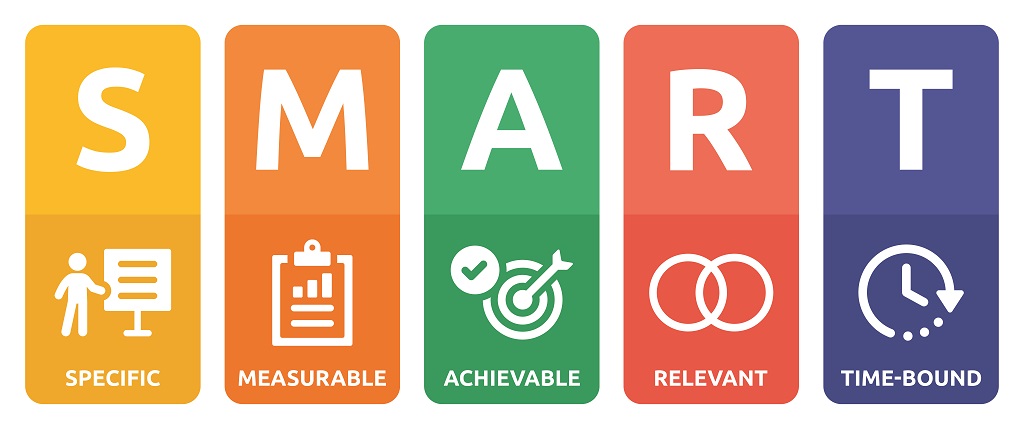
Create targets that are Specific, Measurable, Achievable, Relevant, and Time-bound. For example, you aim to achieve a B or higher in Physics and Mathematics by the end of Form 2 to qualify for a Science bias.
The SMART Framework
- S Specific (The "What") – Be very clear: “I want to get an A in Biology.”
- M Measurable (The "How Much") – Use numbers: “I will study for one hour every evening.”
- A Achievable (The "Is It Possible") – Realistic step: if you usually get a C, aim for a B first.
- R Relevant (The "Why") – Connect to future: “I need high Physics for Engineering.”
- T Time-bound (The "When") – “I will achieve this by the end of this term.”
📌 Example 1 – Vague vs SMART:
🗣️ Vague: “I want to study more.”
✅ SMART: “I will spend 30 minutes every day after school summarising my Chemistry notes for the next four weeks.”
📌 Example 2 – Vague vs SMART:
🗣️ Vague: “I want to be better at Maths.”
✅ SMART: “I will practise five multiplication problems every morning before school to score at least 80% on the next test.”
🧑🏫 5. Consult Mentors
Seek guidance from teachers, career counsellors, and parents. For example, ask a teacher about the workload involved in pursuing the Physics, Chemistry, and Mathematics (PCM) combination.
✅ 6. Make Informed Choices
Finalise your subject selections based on information gathered. Example: You may choose to formally select a Science bias in preparation for the CSEE (Form 4 National Exams).
🎯 Goal Setting Example
Timeline: 4-Year Secondary Goal Setting
Student's Name: Asha Bakari
Target Career: Geologist
| Year | Primary Academic Goal | Career Action Step |
|---|---|---|
| Form 1 | Achieve at least 70% (B) in Basic Mathematics and Geography by the end of the year to build a solid foundation. | Join the Environment or Science Club to learn about rock types and soil formation in Tanzania. |
| Form 2 | Secure a Division I or II in the FTNA (Form Two National Assessment), with a “C” or better in Physics and Geography. | Attend a career talk or visit a local mining site or construction project to see geologists at work. |
| Form 3 | Specialise in the Science Stream and maintain a B average in Physics and Geography as the topics become more complex. | Research the Earth Sciences Institute of Shinyanga (ESIS) or UDOM to understand their specific diploma and degree requirements. |
| Form 4 | Score an A or B in Geography, Physics, and Mathematics in the CSEE (National Exams) to qualify for a PGM or EGM A-Level combination. | Apply for A-Level schools that are renowned for their strong Science departments (e.g., Kibaha, Mzumbe, or Ilboru). |
🗺️ Key Subject Focus for Asha Bakari
- Geography: This is your core subject. Focus on Map Reading and Physical Geography (rocks, mountains, and volcanism).
- Physics: Essential for understanding "geophysics"—how we use tools to find minerals deep underground.
- Mathematics: Geology is a data-driven field; you will need strong Maths skills for surveying and mineral calculations.
- Chemistry: While not part of your final PGM/EGM path, a "D" pass in Chemistry at O-Level is often required for entry into university Geology programmes.
⚠️ Common Mistakes to Avoid
🌳 What to Remember – The Career Tree
“Your answers influence your subject choices. Strong roots support many branches. Which subjects will keep my future options open?”
👩🎓 Activity 1.1: Amina’s subject selection
1. Core Subjects: Which of the following subjects must Amina take as a Form One student? (Select all that apply)
a) Mathematics
b) Fine Arts
c) English Language
d) Agriculture
e) Kiswahili
f) ICT / Computer Studies
Hint: core = Mathematics, English, Kiswahili, and usually ICT, Agriculture – refer to national guidelines.
2. Linking Interests to Subjects: Based on Amina's interest in technology and problem-solving, which elective subjects should she consider?
a) Biology and Chemistry
b) Computer Science and Physics
c) Fine Arts and Music
d) History and Maadili
3. Exploring Career Options: If Amina chooses Computer Science, Mathematics, and Physics, which future careers could these subjects prepare her for?
a) Engineer, Data Scientist, Computer Programmer
b) Artist, Musician, Actor
c) Nurse, Doctor, Social Worker
d) Wildlife Officer, Environmentalist, Forester
4. Balancing Interests and Strengths: Amina also enjoys drawing. Which combination would allow her to pursue art while keeping technology career options open?
a) Computer Science, Mathematics, Physics, Fine Arts
b) Biology, Chemistry, Agriculture, Music
c) History, Kiswahili, Performing Arts, Economics
d) Business Studies, Bookkeeping, English, Physical Education
5. Seeking Guidance: Who should Amina consult? (Select all that apply)
a) Parents or guardians
b) Pathways Mentor or teacher
c) Friends only
d) Career counsellor
📝 Activity 1.2: Develop a Sample Career Pathway Profile for Amina — (use blank template)
🧑🌾 Activity 2.2: James – career exploration
1. Prioritising Core Subjects: Which core subjects should James definitely include to build a strong foundation for any career path? Explain why each is important.
2. Matching Interests to Subjects: James is interested in technology and nature. Which combination of electives best aligns with both?
a) Biology, Computer Science, Physics
b) Fine Arts, Music, Performing Arts
c) Business Studies, Economics, Bookkeeping
d) History, Kiswahili, Ethics
3. Balancing Multiple Career Paths: If James wants to keep options open for engineering, environmental science, and medical-related careers, which set of subjects would give him the most flexibility?
✏️ Suggested: Biology, Chemistry, Physics, Mathematics, Geography, Computer Science.
4. Identifying Potential Conflicts: James also loves creative arts. Could choosing Fine Arts, Music, or Performing Arts conflict with his core interests and future career goals? Explain and suggest a way he could include his creative interest without limiting options.
5. Long-Term Planning: Write two questions James should ask his Pathways Mentor or career counsellor to make an informed decision.
📋 Activity 2.2 (repeated from source): Develop a Sample Career Pathway Profile for Amina — refer to Asha Bakari's table format.
📍 note: page 4 repeats “Activity 2.2: Develop a Sample Career Pathway Profile for Amina” – use similar table as Asha's.
🗂️ Remember: Your Form One choices are roots — they shape the trunk of skills and the branches of careers. Stay curious, consult mentors, and revise your goals each year.

No comments
Post a Comment