FORM ONE TERMINAL EXAMINATIONS (with marking schemes)


Terminal examinations hold significant importance for Form One students as they mark the culmination of their initial year in secondary education, providing a comprehensive assessment of their grasp of foundational concepts across various subjects. These exams serve as a crucial yardstick to gauge their academic progress and adaptation to the secondary school curriculum, highlighting areas where they have excelled and where they may need further support as they advance. Successfully navigating these examinations boosts their confidence and encourages the development of essential study habits, time management skills, and the ability to perform under pressure – skills that are vital for their future academic endeavors. Moreover, the results offer valuable feedback to both students and teachers, enabling targeted interventions and adjustments to learning strategies to ensure a strong academic footing for the subsequent years of secondary school.


FORM ONE TERMINAL EXAMINATIONS (with marking Schemes)

FORM THREE TERMINAL EXAMINATIONS (With Marking Schemes)


Terminal examinations serve as a crucial summative assessment at the end of a course or academic period, providing a comprehensive evaluation of a student's understanding and mastery of the material covered. They act as a benchmark for progression, often determining eligibility for the next educational level or specific qualifications. These high-stakes assessments motivate students to consolidate their learning, develop strong study habits, and improve time management skills. Furthermore, terminal exams offer educators valuable insights into the overall effectiveness of their teaching and the curriculum, highlighting areas of student strength and weakness. In essence, they play a significant role in ensuring accountability, maintaining academic standards, and shaping the educational trajectory of students. 


FORM THREE TERMINAL EXAMINATIONS (With Marking Schemes) 

LITERATURE IN ENGLISH MOST APPEARING AREAS FORM FOUR

The examination format typically revolves around the prescribed set texts for each genre (novel, play, poetry). Therefore, thorough knowledge of these texts is paramount. For the current examination cycle (likely covering texts prescribed a few years prior to 2025), the frequently appearing aspects include:

  • Novel:

    • Character Analysis: Understanding the major and minor characters, their motivations, relationships, and development throughout the novel.
    • Theme Identification and Analysis: Recognizing and discussing the central ideas or messages the author explores (e.g., colonialism, identity, love, betrayal, social injustice).
    • Plot Summary and Analysis: Recounting the main events of the story and analyzing their significance and how they contribute to the overall meaning.
    • Setting and Atmosphere: Understanding the time and place of the story and how they influence the plot, characters, and themes.
    • Literary Devices: Identifying and explaining the use of literary devices such as symbolism, imagery, irony, foreshadowing, and figurative language.
  • Play:

    • Character Analysis: Similar to the novel, understanding the characters, their motivations, and interactions.
    • Theme Identification and Analysis: Recognizing and discussing the play's central ideas.
    • Plot Summary and Analysis: Understanding the sequence of events, conflicts, and resolutions.
    • Dramatic Devices: Identifying and explaining the use of dramatic devices such as dialogue, monologue, soliloquy, aside, stage directions, irony (dramatic, situational, verbal).
    • Structure of the Play: Understanding the division into acts and scenes and their purpose.
  • Poetry Anthology:

    • Theme Identification and Analysis: Understanding the main ideas and messages of individual poems.
    • Poetic Devices: Identifying and explaining the use of various poetic devices such as metaphor, simile, personification, alliteration, assonance, rhyme scheme, rhythm, and meter.
    • Speaker and Tone: Identifying the speaker of the poem and analyzing the tone or attitude conveyed.
    • Imagery and Symbolism: Understanding the use of sensory details and symbols to create meaning.
    • Structure and Form: Analyzing the form of the poem (e.g., sonnet, ballad, free verse) and how it contributes to the meaning.

General Literary Concepts:

Beyond the specific set texts, understanding general literary concepts is also crucial:

  • Genres of Literature: Being able to distinguish between and discuss the characteristics of different genres (prose, drama, poetry).
  • Literary Appreciation: Demonstrating an ability to engage with and critically evaluate literary works.
  • Understanding Literary Terms: Familiarity with common literary terms and their application.

Likely Focus in Examinations:

Examinations often require students to:

  • Answer specific questions about plot, character, and theme based on extracts from the set texts.
  • Write essays on broader themes or character analyses, drawing evidence from the entire text.
  • Analyze poems in detail, focusing on poetic devices and meaning.
  • Compare and contrast characters, themes, or literary techniques across different texts (if the examination format allows for this).

To prepare effectively:

  • Read the set texts thoroughly and multiple times.
  • Take detailed notes on characters, themes, plot, setting, and literary devices.
  • Practice analyzing extracts and writing essays on various aspects of the texts.
  • Familiarize yourself with common literary terms and how to apply them in your analysis.
  • Review past examination papers to understand the types of questions asked and the expected level of analysis.

By focusing on a deep understanding of the prescribed set texts and key literary concepts, you will be well-prepared for the Literature in English examinations. Remember to always support your answers with specific textual evidence.

WARI SECONDARY SCHOOL FORM SIX PRE NATIONAL PHYSICS 3A


Question 1: Simple Harmonic Motion (SHM) with a Meter Rule

This question investigates simple harmonic motion using a meter rule suspended by threads.  

  • Objective: To determine the relationship between the period of oscillation of a suspended meter rule and the distance between the suspension points, and to calculate the acceleration due to gravity (g).

Procedure:

  • Students set up the apparatus as shown in the diagram, adjusting the length of the threads (L) and the distance between them (d). 

  • They make the ruler swing and measure the time for a number of oscillations to find the period (T).  

  • They repeat this process for different values of 'd'.  

Measurements and Analysis:

  • Students record their measurements in a table, including values of d, t, T, and 1/d.  

  • They plot a graph of T against 1/d.  

  • They use the graph and a given formula to calculate the value of 'g'.  

Physics Concepts: This question assesses understanding of:

  • Simple harmonic motion.

  • Period and frequency of oscillations.

  • Factors affecting the period of a physical pendulum.

  • Graphical analysis of data.

  • Calculation of acceleration due to gravity.

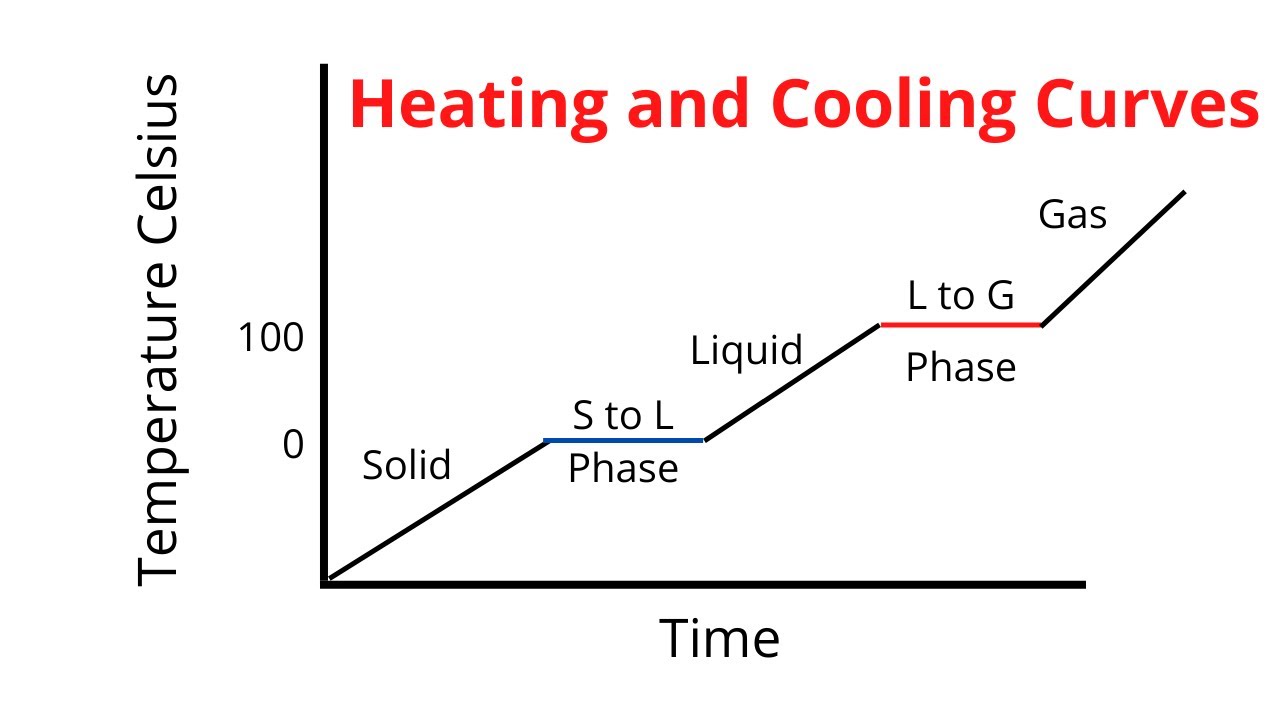
Question 2: Cooling Curve


This question examines the rate of cooling of a calorimeter under different conditions.  

  • Objective: To investigate how the surface properties of a calorimeter affect its rate of cooling.

Procedure:

  • Students blacken the outer surface of a calorimeter and fill it with hot water, recording the temperature as it cools.  

  • They then repeat the experiment with the calorimeter covered in metal foil.  

Measurements and Analysis:

  • Students draw a diagram of the experimental setup.  

  • They record their temperature and time measurements in tables.  

  • They plot cooling curves for both the blackened and foiled calorimeter on the same axes.  

  • They determine the time taken for the water to cool from 80°C to 75°C for each case and compare the results.  

Physics Concepts: This question assesses understanding of:

  • Heat transfer, specifically cooling.

  • The effect of surface properties (black vs. reflective) on heat radiation.

  • Experimental technique in calorimetry.

  • Graphical representation and interpretation of cooling curves.


Question 3: Resistance of a Material


This question focuses on determining the resistance of a material (aluminum foil) using a meter bridge.  

Context: The question is framed within the context of electroplating in a car manufacturing industry.  

Objective: To measure the resistance of an aluminum foil sample and then estimate the resistance of a larger sheet of the same material.

Procedure:

  • Students set up a meter bridge circuit with the aluminum foil and a standard resistor connected in parallel.  

  • They vary the resistance in a resistance box and find the balancing length on the meter bridge for each resistance value.  

Measurements and Analysis:

  • Students draw a circuit diagram of their setup.  

  • They tabulate their results, including the reciprocal of the balancing length (1/L).  

  • They derive the equation governing the experiment (based on the meter bridge principle and parallel resistances).  

  • They plot a graph of 1/L against the resistance.  

  • They determine the gradient of the graph.  

  • They use the gradient and other information to estimate the resistance of a larger aluminum sheet.  


Physics Concepts: This question assesses understanding of:

  • Electrical circuits.

  • Resistance and resistivity.

  • The meter bridge principle.

  • Resistors in parallel.

  • Data analysis and graph interpretation to determine resistance


THE NATURE AND CONTEXT OF ACCOUNTANCY Topic One Test


 THE NATURE AND CONTEXT OF ACCOUNTANCY

Accountancy Form Five - Topic One Test

Instructions: Answer all questions.

  1. Critically evaluate the claim that "accounting is merely a subset of accountancy," providing nuanced examples to illustrate the distinction between the two concepts.  

  2. Analyze the impact of the historical development of accounting practices from ancient times to the era of Multinational Companies (MNCs) on the evolution of accounting systems and their complexity.  

  3. Discuss the challenges and benefits of applying International Financial Reporting Standards (IFRS) in the context of financial accounting practices in Tanzania.  

  4. Compare and contrast the roles of cost accounting and management accounting in providing information for decision-making within an organization, highlighting the limitations of each.  

  5. Evaluate the significance of the qualitative characteristics of accounting information (relevance, faithful representation, comparability, verifiability, timeliness, and understandability) in ensuring the usefulness of financial reports for diverse stakeholders.  

  6. Assess the potential conflicts that may arise between different users of accounting information (e.g., management, investors, creditors, government) due to their varying information needs and objectives.  

  7. "Accounting principles are fundamental truths that must be followed without exception." To what extent do you agree with this statement? Justify your answer by discussing the concepts of consistency and materiality.  

  8. Explain how the accrual basis of accounting and the convention of conservatism address the challenges of uncertainty and timing in financial reporting.  

  9. Analyze the role of accounting information systems (AIS) in modern organizations, considering both the advantages and potential risks associated with their implementation.  

  10. Critically discuss the ethical responsibilities of accountants in ensuring the integrity and reliability of financial information, and the potential consequences of unethical practices.

FORM FIVE


The Tanzanian government, through the Ministry of Education and the Tanzania Institute of Education (TIE), measures Form Five students' academic progress and competencies through a structured assessment system based on the national curriculum. In Form Five (Advanced Secondary Education), students specialize in either Science or Arts streams, and their performance is evaluated through a combination of national examinations, continuous assessments, and practical work. The focus is on ensuring students master subject-specific knowledge, critical thinking, and problem-solving skills to prepare them for higher education or vocational training. Key subjects include Mathematics, Physics, Chemistry, Biology (for Science students), and History, Geography, Kiswahili, English, and Commerce (for Arts students).

For Science students, the government measures their understanding of advanced concepts in subjects like Physics (e.g., electromagnetism, mechanics), Chemistry (e.g., organic chemistry, chemical bonding), and Biology (e.g., genetics, ecology). Practical experiments and laboratory work are emphasized to assess their ability to apply theoretical knowledge. Mathematics is a core subject, with topics like calculus, algebra, and statistics being rigorously tested. Arts students, on the other hand, are evaluated on their analytical and interpretive skills in subjects like History (e.g., Tanzanian and world history), Geography (e.g., climatology, urbanization), and Languages (e.g., essay writing, literature analysis). Both streams also take General Studies, which covers civics, entrepreneurship, and current affairs.

SCIENCE SUBJECTS:

  1. ADVANCED MATHEMATICS
  2. BASIC APPLIED MATHEMATICS
  3. PHYSICS 
  4. PHYSICAL CHEMISTRY
  5. ORGANIC CHEMISTRY
  6. INORGANIC CHEMISTRY
  7. GENERAL CHEMISTRY
  8. BIOLOGY
  9. AGRICULTURE

ARTS SUBJECTS:

  1. PRACTICAL GEOGRAPHY
  2. PHYSICAL GEOGRAPHY
  3. HUMAN GEOGRAPHY
  4. KISWAHILI LUGHA NA SARUFI
  5. ENGLISH LANGUAGE
  6. ADVANCED HISTORY
  7. GENERAL STUDIES

ECONOMICS SUBJECTS:

  1. MICRO ECONOMICS
  2. MACRO ECONOMICS
  3. ACCOUNTANCY 

The assessment system includes mid-term exams, mock exams, and the Form Five National Examinations, which are critical for progression to Form Six. The government also evaluates students' practical skills (e.g., science experiments, fieldwork in geography) and soft skills like teamwork, communication, and research through projects and presentations. Performance is tracked using a grading system (A to F), with results determining eligibility for further education. The goal is to produce well-rounded graduates equipped with knowledge, technical skills, and ethical values to contribute to Tanzania's development.


© all rights reserved
made with by templateszoo