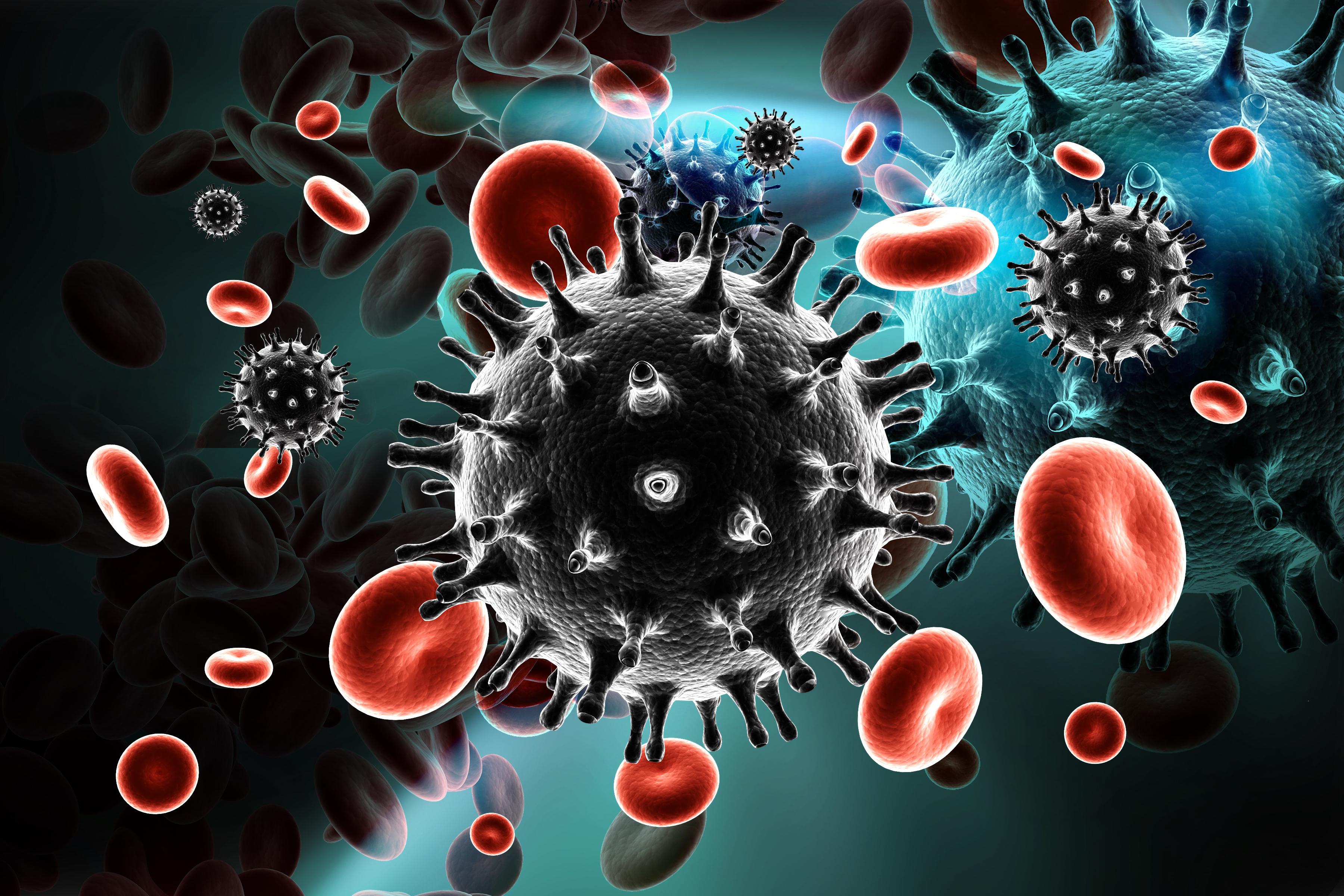
Form Four Biology Exam - HIV/AIDS (With Marking Scheme)

Form Four Biology Exam - HIV/AIDS

FORM FOUR BIOLOGY EXAMINATION – TOPIC: HIV/AIDS

Time: 3 Hours

Instructions:

  • Answer all questions in Sections A and B.
  • Answer two (2) questions only from Section C.
  • Write neatly and use diagrams where necessary.

SECTION A (16 Marks)

1. Multiple Choice Questions (10 Marks)

Choose the correct answer:

  1. The virus that causes AIDS mainly affects:
    • a) Red blood cells
    • b) T-helper cells
    • c) Platelets
    • d) Phagocytes
  2. PLWHA stands for:
    • a) People Living With Health Awareness
    • b) Patients Living With Human Allergy
    • c) People Living With HIV and AIDS
    • d) Protection of Life With Health Assistance
  3. A function of T-helper cells is:
    • a) Destroying red blood cells
    • b) Producing insulin
    • c) Stimulating immune responses
    • d) Transporting oxygen
  4. HIV is classified as a:
    • a) Bacterium
    • b) Protozoan
    • c) Retrovirus
    • d) Fungal pathogen
  5. Which of the following is a non-transmission mode of HIV?
    • a) Unprotected sex
    • b) Sharing clothes
    • c) Sharing needles
    • d) Mother-to-child
  6. HIV can be diagnosed by:
    • a) Skin check
    • b) Urine test
    • c) Blood test
    • d) X-ray
  7. Opportunistic infections are common in:
    • a) Athletes
    • b) People with strong immunity
    • c) PLWHA
    • d) Pregnant women
  8. Responsible behavior towards PLWHA includes:
    • a) Isolation
    • b) Sharing their medication
    • c) Encouraging stigma
    • d) Providing care and empathy
  9. The role of VCT includes:
    • a) Increasing HIV spread
    • b) Counseling and testing
    • c) Providing vaccines
    • d) Avoiding blood donations
  10. T-helper cells are destroyed during HIV infection leading to:
    • a) Muscle weakness
    • b) Immune system failure
    • c) Dehydration
    • d) Bone damage

2. Matching Items (6 Marks)

Match the items in List A with the correct responses in List B:

List AList B
(i) T-helper cellsa) A person who has tested positive for HIV
(ii) Immune suppressionb) Medication that slows HIV multiplication
(iii) PLWHAc) A condition due to low immunity
(iv) Opportunistic infectiond) Virus attacking immune cells
(v) Antiretroviral therapye) White cells coordinating immune defense
(vi) HIV virusf) Disease exploiting weakened immunity

SECTION B (54 Marks)

3. T-helper Cells and HIV (9 Marks)

  1. What are the roles of T-helper cells in immunity? (4 marks)
  2. Explain how HIV affects these cells and its consequences. (5 marks)

4. Misconceptions and Support for PLWHA (9 Marks)

  1. Identify and explain two misconceptions Ali has about PLWHA. (4 marks)
  2. Suggest three responsible ways to support PLWHA in society. (5 marks)

5. HIV Transmission and VCT (9 Marks)

  1. Mention three body fluids that can transmit HIV. (3 marks)
  2. Describe two major functions of VCT in HIV prevention. (6 marks)

6. Opportunistic Infections (9 Marks)

  1. Why are opportunistic infections common in HIV-positive people? (4 marks)
  2. Give three examples of such infections and explain how they affect PLWHA. (5 marks)

7. Importance of ARVs (9 Marks)

  1. What are ARVs and how do they help PLWHA? (5 marks)
  2. Why is strict adherence to ARV treatment important? (4 marks)

8. Emotional and Social Support for PLWHA (9 Marks)

  1. Explain the importance of emotional and social support for PLWHA. (4 marks)
  2. Describe three ways to reduce stigma against PLWHA in schools. (5 marks)

SECTION C (30 Marks)

Answer any two (2) questions.

9. HIV Infection Mechanism (15 Marks)

Describe the infection mechanism of HIV from entry into the body to the destruction of the immune system. Include the role of T-helper cells.

10. Impact of Stigma on PLWHA (15 Marks)

Discuss the impact of stigma on PLWHA and propose five ways to promote a positive and inclusive environment.

11. Importance of VCT (15 Marks)

Explain the importance of regular HIV testing and counseling services (VCT), and how they contribute to HIV prevention and care.

Form Four Biology Exam Answers - HIV/AIDS

FORM FOUR BIOLOGY EXAMINATION – ANSWERS: HIV/AIDS

Time: 3 Hours

SECTION A (16 Marks)

1. Multiple Choice Questions (10 Marks)

  1. The virus that causes AIDS mainly affects:
    • b) T-helper cells
  2. PLWHA stands for:
    • c) People Living With HIV and AIDS
  3. A function of T-helper cells is:
    • c) Stimulating immune responses
  4. HIV is classified as a:
    • c) Retrovirus
  5. Which of the following is a non-transmission mode of HIV?
    • b) Sharing clothes
  6. HIV can be diagnosed by:
    • c) Blood test
  7. Opportunistic infections are common in:
    • c) PLWHA
  8. Responsible behavior towards PLWHA includes:
    • d) Providing care and empathy
  9. The role of VCT includes:
    • b) Counseling and testing
  10. T-helper cells are destroyed during HIV infection leading to:
    • b) Immune system failure

2. Matching Items (6 Marks)

List AList B
(i) T-helper cellse) White cells coordinating immune defense
(ii) Immune suppressionc) A condition due to low immunity
(iii) PLWHAa) A person who has tested positive for HIV
(iv) Opportunistic infectionf) Disease exploiting weakened immunity
(v) Antiretroviral therapyb) Medication that slows HIV multiplication
(vi) HIV virusd) Virus attacking immune cells

SECTION B (54 Marks)

3. T-helper Cells and HIV (9 Marks)

  1. Roles of T-helper cells:
    • Activate B-cells to produce antibodies.
    • Stimulate cytotoxic T-cells to attack infected cells.
    • Coordinate immune responses via cytokine release.
    • Enhance macrophage activity to engulf pathogens.
  2. HIV effects and consequences:
    • HIV infects T-helper cells using CD4 receptors.
    • Virus replicates, destroying T-helper cells.
    • Reduced T-helper cells weaken immune coordination.
    • Leads to immune suppression, increasing opportunistic infections.
    • Progression to AIDS if untreated, causing severe illness.

4. Misconceptions and Support for PLWHA (9 Marks)

  1. Misconceptions:
    • HIV spreads through casual contact (e.g., touching): It requires specific body fluids like blood or semen.
    • PLWHA are always infectious: Proper treatment reduces transmission risk.
  2. Ways to support PLWHA:
    • Provide emotional support through empathy and understanding.
    • Educate communities to reduce stigma and discrimination.
    • Ensure access to healthcare and social services.

5. HIV Transmission and VCT (9 Marks)

  1. Body fluids for HIV transmission:
    • Blood
    • Semen
    • Breast milk
  2. Functions of VCT:
    • Testing: Identifies HIV status for early intervention and treatment.
    • Counseling: Educates on prevention, treatment, and coping, reducing risky behaviors.

6. Opportunistic Infections (9 Marks)

  1. Why common in HIV-positive people:
    • HIV destroys T-helper cells, weakening immunity.
    • Low immunity allows pathogens to proliferate.
    • Reduced immune coordination fails to control infections.
    • Opportunistic pathogens exploit compromised defenses.
  2. Examples and effects:
    • Tuberculosis: Causes lung damage, severe coughing, and weight loss.
    • Pneumocystis pneumonia: Leads to breathing difficulties and fever.
    • Candidiasis: Causes oral or esophageal infections, hindering swallowing.

7. Importance of ARVs (9 Marks)

  1. ARVs and benefits:
    • Antiretrovirals inhibit HIV replication.
    • Slow disease progression to AIDS.
    • Restore T-helper cell counts, improving immunity.
    • Reduce viral load, lowering transmission risk.
    • Improve quality of life for PLWHA.
  2. Importance of adherence:
    • Prevents viral resistance to ARVs.
    • Maintains low viral load for health.
    • Ensures consistent immune system support.
    • Reduces risk of treatment failure.

8. Emotional and Social Support for PLWHA (9 Marks)

  1. Importance of support:
    • Emotional support reduces stress and depression.
    • Social support fosters inclusion and acceptance.
    • Encourages adherence to treatment.
    • Improves mental and physical well-being.
  2. Ways to reduce stigma in schools:
    • Educate students on HIV facts to dispel myths.
    • Promote inclusive activities involving PLWHA.
    • Train teachers to support and protect PLWHA.

SECTION C (30 Marks)

Answers for Questions 9 and 11.

9. HIV Infection Mechanism (15 Marks)

  • HIV enters via blood, semen, or other fluids.
  • Attaches to T-helper cells via CD4 receptors.
  • Viral RNA integrates into host DNA using reverse transcriptase.
  • Replicates within T-helper cells, producing new virions.
  • Infected cells burst, releasing viruses to infect others.
  • T-helper cell count declines, impairing immune coordination.
  • Immune system weakens, leading to opportunistic infections.
  • Progresses to AIDS without treatment, causing severe immune failure.

11. Importance of VCT (15 Marks)

  • Early detection enables timely ARV treatment.
  • Counseling educates on prevention, reducing transmission.
  • Encourages behavior change, like safe sex practices.
  • Supports PLWHA with coping strategies and care access.
  • Reduces stigma through education and awareness.
  • Facilitates monitoring of HIV prevalence in communities.
  • Links PLWHA to treatment and support services.

CSSC FORM FOUR EXAMINATIONS WITH MRKING SCHEMES

CSSC FORM FOUR EXAMINATIONS WITH MRKING SCHEMES

CSSC EXAMS

Access all your important documents in one place. Click on any link below to view or download files.

BASIC MATH WITH MS

PDF Document • 4.2 MB

With step by Step Solutions.

VIEW ON GOOGLE DRIVE

BIOLOGY WITH MS

Word Document • 2.8 MB

Detailed Solutions on every questions well lebbled diagrams.

VIEW ON GOOGLE DRIVE

CHEMISRTY WITH MS

Spreadsheet • 1.5 MB

Marking scheme is merged with the question paper.

VIEW ON GOOGLE DRIVE

CIVICS WITH MS

PDF Document • 3.7 MB

Marking scheme is merged with the question paper.

VIEW ON GOOGLE DRIVE

ENGLISH LANGUAGE WITH MS

Word Document • 0.8 MB

Notes from the last executive examinations with action items and decisions.

VIEW ON GOOGLE DRIVE

HISTORY WITH MS

Spreadsheet • 5.3 MB

Detailed analysis of answers explainging the event and additional notes of the specifics topic.

VIEW ON GOOGLE DRIVE

KISWAHILI NA MWONGOZO WA USAHIHISHAJI

PDF Document • 6.1 MB

Marketing brochure for our new product line with specifications and features. Includes high-quality images and technical details.

VIEW ON GOOGLE DRIVE

PHYSICS WITH MS

Image Gallery • 8.5 MB

Photos from the recent team building event at Lakeview Resort. Includes group photos, activities, and award ceremony pictures.

VIEW ON GOOGLE DRIVE

GEOGRAPHY WITH MS

Presentation • 3.2 MB

Everythin in place for success.

VIEW ON GOOGLE DRIVE

© 2025 All Rights Reserved | MITIHANI POPOTE

For more of examinations please Contact Us via WhatsApp +255 716 655 236

Form Four National Examinations Summary

Form Four National Examinations Summary

Comprehensive overview of Form Four Pre-National Examinations for 2025 conducted by Christian Social Services Commission (CSSC)

Civics Examination

Code: 011 | Date: Wednesday, 13th August 2025 (a.m.) | Duration: 3 Hours

Exam Structure

Sections: A, B, C

Total Questions: 11

Marks Distribution: Section A (16), Section B (54), Section C (30)

Key Topics

Democracy, Governance, Social Problems, Economic Development, Career Development, Culture, Courtship, Globalization, Constitution, Financial Institutions

Question Formats

Multiple Choice, Matching Items, Structured Questions, Essay Questions

Sample Questions

  • Describe six voting procedures for general elections
  • Explain techniques for solving social problems like crime and poverty
  • Analyze the importance of invisible sectors in economic development
  • Discuss challenges faced during courtship

Key Answers

Multiple Choice: E, C, D, D, C, B, A, C, A, D
Matching Items: E, C, B, A, H, G

Biology Examination

Code: Biology 1 | Date: Wednesday, 13th August 2025 (p.m.) | Duration: 3 Hours

Exam Structure

Sections: A, B, C

Total Questions: 11

Marks Distribution: Section A (16), Section B (54), Section C (30)

Key Topics

Human Anatomy, Hormones, Genetics, Reproduction, Cell Biology, Evolution, Defense Mechanisms, Excretion, Coordination

Question Formats

Multiple Choice, Matching Items, Structured Questions, Diagram Drawing, Essay Questions

Sample Questions

  • Explain how human body provides natural defense against pathogens
  • Differentiate between nervous and hormonal coordination
  • Describe problems after pancreas removal
  • Discuss evidence of organic evolution

Key Answers

Multiple Choice: D, B, E, C, E, D, E, C, C, D
Matching Items: H, B, A, C, H, F

Chemistry Examination

Code: 032/1 | Date: Tuesday, 19th August 2025 (a.m.) | Duration: 3 Hours

Exam Structure

Sections: A, B, C

Total Questions: 11

Marks Distribution: Section A (16), Section B (54), Section C (30)

Key Topics

Chemical Reactions, Atomic Structure, Stoichiometry, Electrochemistry, Acids and Bases, Organic Chemistry, Environmental Chemistry

Question Formats

Multiple Choice, Chemical Equations, Calculations, Structured Questions, Essay Questions

Sample Questions

  • Balance chemical equations and identify reaction types
  • Perform mole calculations and stoichiometry problems
  • Explain industrial processes like Haber and Contact processes
  • Discuss environmental impacts of chemical processes

Physics Examination

Code: 031 | Date: Monday, 25th August 2025 (a.m.) | Duration: 2.5 Hours

Exam Structure

Sections: A, B, C

Total Questions: 10

Marks Distribution: Section A (15), Section B (70), Section C (30)

Key Topics

Mechanics, Electricity, Magnetism, Light, Waves, Energy, Thermodynamics

Question Formats

Multiple Choice, Calculations, Diagram Drawing, Structured Questions, Essay Questions

Sample Questions

  • Solve problems on motion and forces
  • Apply Ohm's law in electrical circuits
  • Explain magnetic fields and electromagnetic induction
  • Analyze optical systems and wave phenomena

Mathematics Examination

Code: 041 | Date: Wednesday, 20th August 2025 (a.m.) | Duration: 2.5 Hours

Exam Structure

Sections: A, B

Total Questions: 10

Marks Distribution: All questions carry 10 marks each

Key Topics

Algebra, Geometry, Trigonometry, Statistics, Calculus, Coordinate Geometry, Sets, Matrices

Question Formats

Calculations, Proofs, Problem Solving, Graphical Representations

Sample Questions

  • Solve simultaneous equations
  • Calculate areas and volumes of geometric shapes
  • Apply trigonometric functions to solve problems
  • Analyze statistical data and probability

© 2023 Form Four National Examinations Summary | Christian Social Services Commission (CSSC)

Northern Zone Joint Examinations Syndicate (NZ-JES) | 2025 Pre-National Examinations

CSSC FORM TWO EXAMINATION (With Marking Schemes)

Form Two Examination Summary

Form Two Examination Summary

Christian Social Services Commission (CSSC) - Northern Zone Joint Examinations Syndicate (NZ-JES)

Overview

The Form Two Pre-National Assessment for 2025 was conducted by the Christian Social Services Commission (CSSC) through the Northern Zone Joint Examinations Syndicate (NZ-JES). The assessment covered three core subjects: Physics, Chemistry, and Basic Mathematics, each designed to evaluate students' understanding of fundamental concepts and their application abilities.

The examinations were structured to test knowledge across various cognitive levels, from basic recall to application and problem-solving. Each paper included multiple-choice questions, structured questions, and in some cases, practical or diagram-based questions to comprehensively assess student competency.

Physics Examination

The Physics paper (Code 031) was a 2.5-hour examination consisting of three sections with a total of ten questions. Section A included multiple-choice questions covering laboratory safety, light properties, electricity, mechanics, and energy concepts. Section B required detailed answers on topics including magnetism, thermodynamics, motion, and simple machines.

Key areas assessed included:

  • Laboratory safety precautions and procedures
  • Light behavior through different materials
  • Electrical calculations using Ohm's Law
  • Pressure and surface area relationships
  • Image formation in mirrors
  • Energy transformations
  • Density calculations
  • Static electricity concepts
  • Renewable and non-renewable energy sources

Section C included more advanced problems involving velocity-time graphs, momentum conservation, and machine efficiency calculations.

Chemistry Examination

The Chemistry paper (Code 032/1) was a 3-hour examination divided into three sections. Section A contained multiple-choice questions testing fundamental concepts including types of mixtures, gas identification, combustion, chemical bonding, and scientific methodology.

Notable content areas included:

  • Types of chemical reactions and equations
  • Atomic structure and subatomic particles
  • Stoichiometry and mole concept calculations
  • Electrochemistry and Faraday's laws
  • Catalysis in industrial processes
  • Chemical bonding and compound formation
  • Isomerism in organic compounds
  • Environmental chemistry and pollution
  • Metal extraction processes

The examination required students to balance chemical equations, perform calculations involving moles and gas volumes, and explain chemical processes in industrial and environmental contexts.

Basic Mathematics Examination

The Basic Mathematics paper (Code 041) was a 2.5-hour examination consisting of ten compulsory questions covering a wide range of mathematical concepts and skills.

Key content areas included:

  • Number operations including GCF, LCM, and decimal conversions
  • Unit conversions and significant figures
  • Geometry including angle calculations and area problems
  • Algebra including simultaneous equations and quadratic equations
  • Ratio, proportion, and percentage calculations
  • Coordinate geometry and transformations
  • Logarithms and surds
  • Trigonometry and exact values
  • Set theory and Venn diagrams
  • Statistics including frequency distributions

The paper emphasized practical application of mathematical concepts to real-world situations, requiring students to show all working and provide answers in simplest form where appropriate.

Examination Structure

All examinations followed a similar pattern with clear instructions regarding allowed materials (non-programmable calculators only), prohibited items (communication devices), and requirements for writing assessment numbers on every page. Each paper provided necessary constants and formulas, reducing the need for memorization and focusing instead on application of concepts.

The assessments were designed to prepare students for national-level examinations while identifying areas needing improvement in the Form Two curriculum. The balanced approach between theoretical knowledge and practical application aimed to develop well-rounded students capable of critical thinking and problem-solving across scientific and mathematical disciplines.

CSSC FORM TWO EXAMINATIONS

CSSC FORM TWO EXAMINATIONS

Access all your important documents in one place. Click on any link below to view or download files.

BIOLOGY WITH MARKING SCHEME

PDF Document • 4.2 MB

Biology examination with comprehensive marking scheme.

VIEW ON GOOGLE DRIVE

CHEMISTRY WITH MARKING SCHEME

Word Document • 2.8 MB

Chemistry examination with comprehensive marking scheme.

VIEW ON GOOGLE DRIVE

CIVICS EXAMINATION

Spreadsheet • 1.5 MB

Civics examination with comprehensive marking scheme.

VIEW ON GOOGLE DRIVE

ENGLISH LANGUAGE

PDF Document • 3.7 MB

English Language with comprehensive marking scheme.

VIEW ON GOOGLE DRIVE

GEOGRAPHY EXAM

Word Document • 0.8 MB

The examination is merged with marking scheme.

VIEW ON GOOGLE DRIVE

HISTORY EXAMINATION

Spreadsheet • 5.3 MB

Detailed marking scheme.

VIEW ON GOOGLE DRIVE

KISWAHILI

PDF Document • 6.1 MB

Mtihani umeambatanishwa na mwongozo wa usahihishaji.

VIEW ON GOOGLE DRIVE

BASIC MATHEMATICS

Image Gallery • 8.5 MB

Marking scheme is detailed with steps and procedures to calculate every problem.

VIEW ON GOOGLE DRIVE

PHYSICS EXAMINATION

Presentation • 3.2 MB

Well presentation in calculations and additional notes.

VIEW ON GOOGLE DRIVE

© 2025 All Right Reserve | MITIHANI POPOTE

For more of examinations please Contact Us via WhatsApp +255 716 655 236

Form Two National Exam Topics

Form Two National Exam Topics

Comprehensive list of topics commonly tested in Form Two National Examinations

Mathematics

10+ Key Topics

  • Algebra and Equations
  • Geometry and Angles
  • Statistics and Data Handling
  • Fractions, Decimals, and Percentages
  • Ratios and Proportions
  • Coordinate Geometry
  • Sets and Venn Diagrams
  • Commercial Arithmetic
  • Linear Programming
  • Trigonometry

Physics

8+ Key Topics

  • Measurements and Units
  • Force and Motion
  • Work, Energy, and Power
  • Simple Machines
  • Pressure in Solids and Liquids
  • Temperature and Heat
  • Light and Optics
  • Static Electricity
  • Current Electricity
  • Magnetism

Chemistry

9+ Key Topics

  • Introduction to Chemistry
  • States of Matter
  • Elements, Compounds, and Mixtures
  • Air Combustion and Rusting
  • Atomic Structure
  • Periodic Classification
  • Water and Hydrogen
  • Chemical Reactions
  • Acids, Bases, and Salts
  • Carbon and Its Compounds

Biology

8+ Key Topics

  • Classification of Living Things
  • Cell Structure and Organization
  • Nutrition in Plants and Animals
  • Transport in Living Things
  • Gaseous Exchange and Respiration
  • Excretion and Homeostasis
  • Coordination and Response
  • Reproduction in Plants and Animals
  • Genetics
  • Ecology

English Language

7+ Key Topics

  • Comprehension and Summary
  • Grammar and Usage
  • Composition Writing
  • Poetry Analysis
  • Novel and Play Analysis
  • Vocabulary Development
  • Oral Literature
  • Essay Writing Techniques
  • Language Skills

Civics

6+ Key Topics

  • The Concept of Citizenship
  • Human Rights
  • Responsible Decision Making
  • Government of Tanzania
  • Democracy
  • Law and Society
  • Economic Development
  • Global Issues

History

7+ Key Topics

  • Evolution of Man
  • Development of Economic Activities
  • Contacts between East Africa and the Outside World
  • Social Economic and Political Development
  • African and Tanzania Independence
  • International Relations
  • Development of Social Services

Geography

8+ Key Topics

  • The Solar System
  • Major Features of the Earth's Surface
  • Weather and Climate
  • Map Reading and Interpretation
  • Sustainable Use of Power and Energy Resources
  • Human Activities
  • Environmental Issues and Conservation
  • Transport and Communication

© 2023 Form Two National Exam Topics | Comprehensive guide to examination preparation

Note: Topics may vary slightly by education system and country

MITIHANI POPOTE EXAMINATIONS SERIES FORM FOUR CHEMISTRY EXAMINATION SERIES 10 (With Marking Guide)

FORM FOUR CHEMISTRY EXAMINATION SERIES 10 Chemistry Exam Answers - Series 10

Chemistry Examination Answers
Series 10

Section A (15 Marks)

Question 1(i)

Splints are among the first aid kit components. Which of the following sentences best describes its use?

C. Used to support broken bones and is tied using bandages

Splints serve crucial medical purposes:

  • Immobilization: Prevent movement of fractured bones to avoid further injury
  • Pain reduction: Minimize pain by stabilizing the injury
  • Healing: Maintain proper bone alignment during healing
  • Types: Can be rigid (wood/metal) or flexible (inflatable)

First aid splints are temporary until professional medical care is available.

Question 1(ii)

A simple proof that some chemical reactions take place in our bodies is that

D. The food we eat or the drinks we take are quite different from the waste products from our bodies

This demonstrates metabolic transformations:

  • Digestion: Complex carbohydrates → simple sugars
  • Respiration: Glucose + O₂ → CO₂ + H₂O + energy
  • Protein metabolism: Amino acids → urea
  • Evidence: Chemical analysis shows food (input) and excretory products (output) have completely different compositions

Question 1(iii)

The reaction, 4NH₃(g) + 5O₂(g) → 4NO(g) + 6H₂O(g), is an example of a

C. Redox reaction

This is the Ostwald process for nitric acid production:

  • Oxidation: N changes from -3 (NH₃) to +2 (NO)
  • Reduction: O changes from 0 (O₂) to -2 (H₂O)
  • Simultaneous: Both oxidation and reduction occur
  • Industrial importance: First step in nitric acid manufacture

NH₃ oxidation: -3 → +2 (loss of 5e⁻ per N atom)

O₂ reduction: 0 → -2 (gain of 2e⁻ per O atom)

Question 2 - Matching

List A List B Explanation
(i) Lime water turns milky when air is pumped E. Presence of carbon dioxide CO₂ reacts with Ca(OH)₂ to form insoluble CaCO₃
(ii) Condition for iron to rust B. Oxygen and water/moisture Both required for electrochemical corrosion
(iii) Oxygen, Heat and Fuel D. Fire triangle Three components needed for combustion
(iv) Coating iron with zinc G. Galvanization Zinc sacrificially protects iron from rusting
(v) Flammable liquids H. Class B fire Classification for liquid fuel fires

Section B (70 Marks)

Question 3 7 marks

(a) Water hardness analysis:

(i) Harder water brand: Uhai

Hardness is primarily caused by Ca²⁺ and Mg²⁺ ions:

  • Uhai: 3.05 mg/L Ca²⁺ + 4.15 mg/L Mg²⁺ = 7.2 mg/L total hardness
  • Dasani: 2.69 mg/L Ca²⁺ + 0.11 mg/L Mg²⁺ = 2.8 mg/L total hardness
  • Higher mineral content = greater hardness

(ii) Calcium benefits:

  1. Essential for bone and teeth development
  2. Required for muscle function and nerve transmission
  3. Helps blood clotting

(iii) Water treatment: Chlorine is added as disinfectant

(b) Hydrogen vs. Phosphorus:

(i) More electropositive: Hydrogen

Electropositivity decreases across periods:

  • Hydrogen (Group 1) more likely to lose electrons
  • Phosphorus (Group 15) more electronegative

(ii) Compound formed: PH₃ (Phosphine)

P + 3H → PH₃

Question 4 7 marks

Oxygen preparation:

2H₂O₂(l) → 2H₂O(l) + O₂(g)

(a)(i) MnO₂ role: Catalyst

Manganese dioxide:

  • Provides alternative reaction pathway
  • Lowers activation energy
  • Not consumed in reaction

(ii) Without catalyst: Reaction would be extremely slow

(b) Oxygen test:

  1. Insert glowing splint into gas
  2. Positive test: splint reignites brightly
  3. Confirms presence of oxygen (supports combustion)

Question 7 7 marks

Molecular formula determination:

Given: 86% C, 14% H; 3.2 dm³ = 6g at STP

Step 1: Empirical formula

Element % Moles Ratio
C 86 86/12 = 7.17 7.17/7.14 ≈ 1
H 14 14/1 = 14 14/7.14 ≈ 2

Empirical formula: CH₂ (Mass = 14 g/mol)

Step 2: Molar mass

3.2 dm³ = 0.143 mol (3.2/22.4)

Molar mass = 6g/0.143mol = 42 g/mol

Step 3: Molecular formula

n = 42/14 = 3 → (CH₂)₃ = C₃H₆

Molecular formula: C₃H₆

Section C (15 Marks)

Question 13 15 marks

Water pollution prevention methods:

  1. Proper waste disposal:
    • Treat industrial effluents before discharge
    • Implement sewage treatment systems
  2. Agricultural management:
    • Controlled fertilizer/pesticide use
    • Establish buffer zones near water bodies
  3. Oil spill prevention:
    • Proper maintenance of oil tankers
    • Quick response protocols
  4. Public education:
    • Promote proper chemical disposal
    • Encourage water conservation
  5. Legislation:
    • Enforce water quality standards
    • Penalize polluters
  6. Ecosystem protection:
    • Preserve wetlands (natural filters)
    • Maintain riparian vegetation

Probability Questions (With detailed answers)

Probability Questions

Probability Questions

1.

An individual is picked at random from a group of 52 athletes. Suppose that 26 of the athletes are female of which 6 are swimmers. Also, there are 10 swimmers among male athletes.

(a) Given that the individual picked is a female, find the probability that she is a swimmer.
(b) Given that the individual picked is a swimmer, find the probability that he is a male.
2.

A basket contains 10 apples and 20 oranges out of which 3 apples and 5 oranges are defective. If we choose two fruits at random, what is the probability that either both are oranges or both are non-defective?

3.

A packing plant fills bags with cement. The weight X kg of a bag of cement can be modelled by a normal distribution with mean 50kg and standard deviation 2kg.

i. Find P(X > 53)
ii. Find the weight that is exceeded by 99% of the bags
iii. Three bags are selected at random, find the probability that two weigh more than 53kg and one weighs less than 53kg.
4.

From experience a high-jumper knows that he can clear a height of at least 1.78m once in 5 attempts. He also knows that he can clear a height of at least 1.65m on 7 out of 10 attempts. Assuming that heights the high-jumper can reach follow a Normal Distribution,

(a) Draw a sketch to illustrate the above information
(b) Find to three decimal places, the mean and standard deviation of the heights the high-jumper can reach.
(c) Calculate the probability that he can jump at least 1.74m.
5.

A drinks machine dispenses coffee into cups. A sign on the machine indicates that each cup contains 50ml of coffee. The machine actually dispenses a mean amount of 55ml per cup and 10% of the cups contain less than the amount stated on the sign. Assuming that the amount of coffee dispensed into each cup is normally distributed, find;

(a) The standard deviation of the amount of coffee dispensed per cup in ml,
(b) The percentage of cups that contains more than 61ml
(c) Following complaints, the owners of the machine make adjustments. Only 2.5% of cups now contain less than 50ml. The standard deviation of the amount dispensed is reduced to 3ml. Assuming that the amount of coffee dispensed is still normally distributed, find the new mean amount of coffee per cup.
Probability Questions with Detailed Solutions

Probability Questions with Detailed Solutions

Question 1

An individual is picked at random from a group of 52 athletes. Suppose that 26 of the athletes are female of which 6 are swimmers. Also, there are 10 swimmers among male athletes.

(a) Given that the individual picked is a female, find the probability that she is a swimmer.

Solution:

We use conditional probability:

P(Swimmer | Female) = Number of female swimmers / Total number of females

Given:

  • Total females = 26
  • Female swimmers = 6

P(Swimmer | Female) = 6/26 = 3/13 ≈ 0.2308 or 23.08%

(b) Given that the individual picked is a swimmer, find the probability that he is a male.

Solution:

First, find total number of swimmers:

Female swimmers = 6
Male swimmers = 10
Total swimmers = 6 + 10 = 16

Now use conditional probability:

P(Male | Swimmer) = Number of male swimmers / Total number of swimmers

P(Male | Swimmer) = 10/16 = 5/8 = 0.625 or 62.5%

Question 2

A basket contains 10 apples and 20 oranges out of which 3 apples and 5 oranges are defective. If we choose two fruits at random, what is the probability that either both are oranges or both are non-defective?

Solution:

Total fruits = 10 apples + 20 oranges = 30

Case 1: Both are oranges

Number of ways to choose 2 oranges from 20:

C(20, 2) = 20!/(2! × 18!) = 190

Case 2: Both are non-defective

Non-defective apples = 10 - 3 = 7
Non-defective oranges = 20 - 5 = 15
Total non-defective = 7 + 15 = 22

Number of ways to choose 2 non-defective fruits:

C(22, 2) = 22!/(2! × 20!) = 231

Overlap: Both are oranges AND non-defective

Number of ways to choose 2 non-defective oranges:

C(15, 2) = 15!/(2! × 13!) = 105

Using the inclusion-exclusion principle:

P(A ∪ B) = P(A) + P(B) - P(A ∩ B)

= C(20,2)/C(30,2) + C(22,2)/C(30,2) - C(15,2)/C(30,2)

= (190 + 231 - 105)/435 = 316/435 ≈ 0.7264 or 72.64%

Question 3

A packing plant fills bags with cement. The weight X kg of a bag of cement can be modelled by a normal distribution with mean 50kg and standard deviation 2kg.

i. Find P(X > 53)

Solution:

First, calculate the z-score:

z = (x - μ)/σ = (53 - 50)/2 = 1.5

Using standard normal distribution tables:

P(X > 53) = P(Z > 1.5) = 1 - P(Z ≤ 1.5) = 1 - 0.9332 = 0.0668 or 6.68%

ii. Find the weight that is exceeded by 99% of the bags

Solution:

We need to find x such that P(X > x) = 0.99, which means P(X ≤ x) = 0.01

Find z-score corresponding to cumulative probability 0.01:

z ≈ -2.326 (from standard normal tables)

Convert back to original scale:

x = μ + zσ = 50 + (-2.326)(2) ≈ 50 - 4.652 ≈ 45.348 kg

Therefore, 99% of bags exceed approximately 45.35 kg.

iii. Three bags are selected at random, find the probability that two weigh more than 53kg and one weighs less than 53kg.

Solution:

From part (i), P(X > 53) = 0.0668
Therefore, P(X ≤ 53) = 1 - 0.0668 = 0.9332

This is a binomial probability problem with n=3, k=2, p=0.0668

P(2 >53 and 1 ≤53) = C(3,2) × (0.0668)² × (0.9332)¹

= 3 × 0.004462 × 0.9332 ≈ 0.0125 or 1.25%

Question 4

From experience a high-jumper knows that he can clear a height of at least 1.78m once in 5 attempts. He also knows that he can clear a height of at least 1.65m on 7 out of 10 attempts. Assuming that heights the high-jumper can reach follow a Normal Distribution,

(a) Draw a sketch to illustrate the above information

Solution:

[Visual sketch would show:]

  • A normal distribution curve with mean μ and standard deviation σ
  • 1.78m marked on the right tail with area to the right = 1/5 = 0.2
  • 1.65m marked further left with area to the right = 7/10 = 0.7
(b) Find to three decimal places, the mean and standard deviation of the heights the high-jumper can reach.

Solution:

We have two equations:

1. P(X > 1.78) = 0.2 ⇒ P(X ≤ 1.78) = 0.8
Corresponding z-score ≈ 0.842

2. P(X > 1.65) = 0.7 ⇒ P(X ≤ 1.65) = 0.3
Corresponding z-score ≈ -0.524

Set up equations:
(1.78 - μ)/σ = 0.842
(1.65 - μ)/σ = -0.524

Solving these simultaneously:
From first equation: μ = 1.78 - 0.842σ
Substitute into second equation:
(1.65 - (1.78 - 0.842σ))/σ = -0.524
(-0.13 + 0.842σ)/σ = -0.524
-0.13/σ + 0.842 = -0.524
-0.13/σ = -1.366
σ ≈ 0.0952

Then μ ≈ 1.78 - 0.842(0.0952) ≈ 1.78 - 0.080 ≈ 1.700

Final answers:
Mean (μ) ≈ 1.700 m
Standard deviation (σ) ≈ 0.095 m

(c) Calculate the probability that he can jump at least 1.74m.

Solution:

Using μ = 1.700, σ = 0.095:

z = (1.74 - 1.700)/0.095 ≈ 0.421

P(X > 1.74) = P(Z > 0.421) = 1 - P(Z ≤ 0.421) ≈ 1 - 0.6635 ≈ 0.3365 or 33.65%

Question 5

A drinks machine dispenses coffee into cups. A sign on the machine indicates that each cup contains 50ml of coffee. The machine actually dispenses a mean amount of 55ml per cup and 10% of the cups contain less than the amount stated on the sign. Assuming that the amount of coffee dispensed into each cup is normally distributed, find;

(a) The standard deviation of the amount of coffee dispensed per cup in ml,

Solution:

Given:

  • μ = 55 ml
  • P(X < 50) = 0.10

Find z-score corresponding to P(Z < z) = 0.10:
z ≈ -1.2816

z = (x - μ)/σ
-1.2816 = (50 - 55)/σ
σ = -5/-1.2816 ≈ 3.901 ml

(b) The percentage of cups that contains more than 61ml

Solution:

Using μ = 55 ml, σ ≈ 3.901 ml:

z = (61 - 55)/3.901 ≈ 1.538

P(X > 61) = P(Z > 1.538) = 1 - P(Z ≤ 1.538) ≈ 1 - 0.938 ≈ 0.062 or 6.2%

(c) Following complaints, the owners of the machine make adjustments. Only 2.5% of cups now contain less than 50ml. The standard deviation of the amount dispensed is reduced to 3ml. Assuming that the amount of coffee dispensed is still normally distributed, find the new mean amount of coffee per cup.

Solution:

Given:

  • New σ = 3 ml
  • P(X < 50) = 0.025

Find z-score corresponding to P(Z < z) = 0.025:
z ≈ -1.96

z = (x - μ)/σ
-1.96 = (50 - μ)/3
μ = 50 + 1.96 × 3 = 50 + 5.88 = 55.88 ml

The new mean is approximately 55.88 ml.

© all rights reserved
made with by templateszoo